10 Top Tips for Coupling Usage in Your Applications
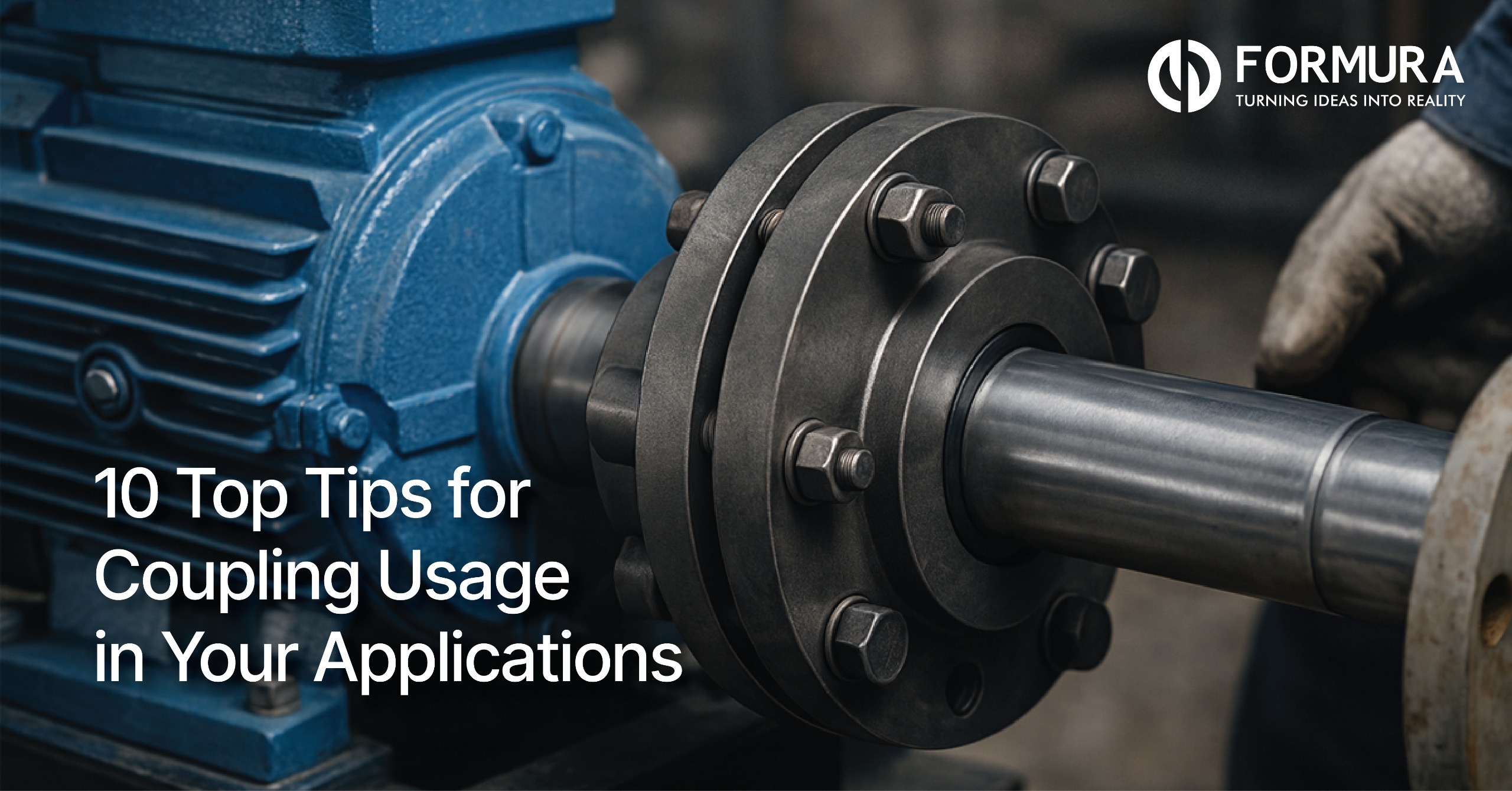
In the engine room of any industrial operation, from conveyor belts to heavy mining equipment, power transmission systems are the lifeblood. The critical mechanical components enabling this power flow are industrial couplings. When a coupling fails, the consequences are immediate and costly: unplanned downtime, expensive emergency repairs, and significant lost productivity.
A coupling is a mechanical device that connects two rotating shafts to transmit power efficiently while simultaneously accommodating unavoidable shaft misalignment and movement. To ensure you maximise the reliability and lifespan of this vital link, this guide walks you through the essential coupling tips, covering everything from initial coupling selection to meticulous coupling maintenance.
Selecting the correct coupling ensures the smooth transfer of power between a motor and its driven load. Engineers must first identify the specific type of shaft misalignment present in their system.
Flexible couplings are designed to absorb small amounts of parallel, angular, or axial movement. The torque requirements of the application must always include a proper service factor for shock loads.
High-precision tasks like robotics require zero-backlash couplings to prevent errors in positioning. The operating environment dictates whether stainless steel or elastomeric materials are necessary.
Regular maintenance checks should focus on detecting early signs of wear in the coupling’s insert. Properly installed couplings protect expensive bearings and gearboxes from premature mechanical failure.
The Foundation - Selecting the Right Coupling
The coupling is your system's shock absorber and flexible joint; choosing the correct type is non-negotiable for reliable coupling usage.
Tip 1: Understand and Identify the Type of Misalignment
Shaft movement is inherent due to manufacturing tolerances, thermal expansion, and settling of foundations. Your coupling must be capable of handling the specific type of misalignment present:
- Parallel Misalignment: Shaft centerlines are parallel but offset.
- Angular Misalignment: Shaft centerlines intersect at an angle.
- Axial Misalignment (End Float): The shafts move in and out along the axis.
A rigid coupling cannot handle any misalignment, while a flexible coupling (like a gear coupling or a disc coupling) is designed to absorb different combinations. The coupling choice depends entirely on the specific misalignment present.
Tip 2: Calculate Your Application's Requirements
Never size a coupling purely on the motor's horsepower (HP). You must accurately calculate the application's actual requirements.
- Torque: Identify both the nominal (running) torque and the peak (starting or momentary) torque.
- RPM: Know the operating speed. High-speed systems require dynamically balanced couplings.
- Service Factor: Always apply a service factor (which accounts for shock loads and operating hours) to your calculated torque.
A fundamental rule for coupling selection is to always select a coupling with a nominal torque capacity significantly above the calculated required torque to prevent early failure.
Tip 3: Consider the Operating Environment
The surrounding environment dictates the coupling material and seal requirements.
- Temperature Extremes: High heat requires metallic couplings; extreme cold affects elastomer flexibility.
- Contaminants: The presence of chemicals, moisture, dust, or abrasive materials requires special consideration. For corrosive environments, opt for materials like stainless steel. For dusty areas, ensure robust seals to prevent ingress into lubricated gear couplings.
A reputable coupling supplier or Industrial Coupling Supplier can guide you on the best materials for your specific conditions.
Installation and Commissioning - Getting it Right from the Start
An improperly installed coupling will fail, regardless of its quality. How to install couplings is a critical skill.
Tip 4: Prioritise Precise Shaft Alignment
Though flexible, every coupling has a maximum tolerance for misalignment. Operating beyond this limit drastically shortens the lifespan of not just the coupling, but also the connected shafts, bearings, and seals.
Stress that even flexible couplings have alignment limits. Recommend using laser alignment tools for accuracy over reliance on straight edges or traditional dial indicators. This is the single biggest factor in maximising coupling life.
Tip 5: Follow Proper Installation Procedures
Avoid all "brute force" methods like hammering to seat a hub or sleeve. This can damage bearings and deform the coupling components, leading to immediate vibration.
- Heating: For interference fits (common in gear couplings), use induction heaters or hot oil to expand the coupling hub before mounting.
- Torque Sequence: For flange couplings or clamp-style hubs, strictly follow the manufacturer’s specified tightening sequence and torque values.
After installation, manually turn the shafts to check for free movement and binding.
Also Read : Industrial Couplings: Types, Uses & Key Benefits Explained How to Choose the Right Gear Coupling for Your Needs
Operation and Maintenance - Ensuring Long-Term Reliability
Diligent coupling maintenance is the key to minimising unplanned breakdowns and maximising the return on investment.
Tip 6: Establish a Routine Inspection Schedule
Regular visual and auditory inspections are the cheapest form of insurance.
- Visual Checks: Look for obvious signs of wear, such as cracks, corrosion, damaged covers, or missing/loose hardware, including set screws.
- Auditory Checks: Listen for unusual coupling noises—squealing (rubbing), rattling (loose parts), or grinding (wear).
Check for grease or oil leakage, which is a common sign of seal failure in lubricated types like gear couplings.
Tip 7: Adhere to Lubrication Guidelines (If Applicable)
For lubricated couplings (like gear and grid types), many failures are directly attributed to poor lubrication practices.
- Correct Type and Quantity: Only use the lubricant type specified by the gear coupling manufacturers. The wrong viscosity or additive package can destroy the coupling quickly.
- Re-lubrication Intervals: Strictly follow the recommended intervals. Lubricant degrades and centrifuges over time, reducing its protective ability.
Tip 8: Maintain Clearance for Movement and Service
Ensure the design allows for adequate clearance between the coupling components and the surrounding equipment.
- Axial Flex: The coupling needs room to flex axially and accommodate the thermal growth of the shafts.
- Maintenance Space: Ensure there is adequate space to access and remove bolts, covers, and sleeves for easy inspection and replacement.
Advanced Considerations and Common Pitfalls
Tip 9: Don't Forget About Balance and Vibration
For high-speed applications (typically above 3,600 RPM), ensure the coupling is dynamically balanced. An unbalanced coupling at high speeds can induce severe, damaging vibrations that quickly destroy bearings and seals in the connected machinery.
Tip 10: Know When to Call a Professional
While these tips cover most standard applications, certain situations demand expert advice.
- Complex Applications: High speeds, reversing loads, extreme shock loads, or critical processes.
- Unique Constraints: Unusual space limitations or highly abrasive environments.
Don't hesitate to consult with an experienced engineer, a gear coupling dealer, or your Best gear coupling supplier for complex requirements. Their specialised knowledge can prevent catastrophic failure down the line.
Conclusion
Couplings are often the weakest mechanical link, yet they are essential for protecting the most expensive assets in your power train. Proper coupling usage is not a one-time event, but a continuous cycle of correct coupling selection, precise installation, and diligent coupling maintenance. By implementing these 10 tips, you ensure that your power transmission components deliver maximum uptime and efficiency.