The Complete Guide to Pin Bush Couplings: Advantages, Selection, and Maintenance
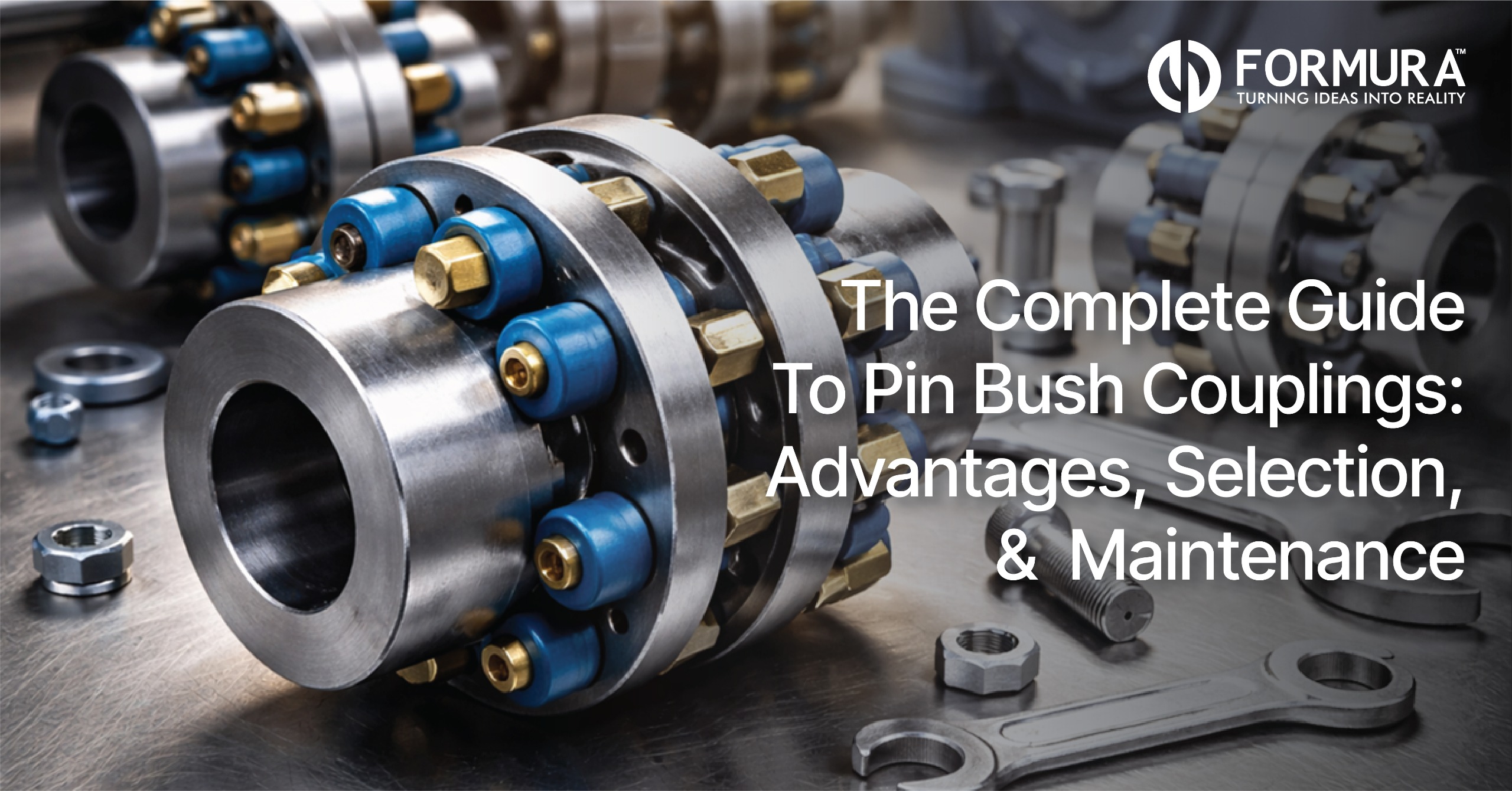
In the demanding world of industrial manufacturing, mechanical downtime isn't just an inconvenience—it's a massive drain on profitability. Imagine a high-speed pump or a heavy-duty mixer running just a fraction of a millimeter out of alignment. Over time, that tiny deviation generates heat, creates noise, and exerts mechanical stress that can damage bearings and cause shafts to snap.
This is where the Formura pin bush coupling—often referred to as a flexible pin bush coupling—becomes the unsung hero of your drive train. As a cost-effective and remarkably durable solution, Formura’s engineering ensures these couplings act as the flexible backbone of your machinery, absorbing shocks and compensating for the imperfections inevitable in any mechanical setup.This is where the Formura pin bush coupling—often referred to as a flexible pin bush coupling—becomes the unsung hero of your drive train. As a cost-effective and remarkably durable solution, Formura’s engineering ensures these couplings act as the flexible backbone of your machinery, absorbing shocks and compensating for the imperfections inevitable in any mechanical setup.
What is a Pin Bush Coupling? Anatomy & Working Principle
At its core, a pin bush coupling is a type of flexible coupling designed to connect two shafts—typically a motor shaft and a driven machine shaft—to transmit torque while accommodating minor misalignments. Unlike rigid couplings, which require near-perfect alignment, the Formura bushed pin coupling utilizes specialized elastic elements to "give" under stress.
The Visual Breakdown: Four Key Components
To understand how an FCL coupling (the global industry standard) works, one must look at its four primary components as engineered by Formura:
- Flanges/Hubs: These are the two main discs, usually manufactured by Formura from high-grade cast iron (like FG 200) or forged steel. One flange is keyed to the drive shaft, and the other to the driven shaft.
- Pins: Also known as coupling bolts, these are made of high-tensile steel. They are fixed into one flange and extend into the matching holes of the opposing flange.
- Bushes: This is the core of the rubber bush coupling. These are elastic sleeves—often made from NBR (Nitrile) or Polyurethane—that fit snugly over the pins.
- Nuts & Washers: These secure the pins in place, ensuring the assembly remains intact during high-speed rotation.
How It Works: The Flow of Power
The power flow in a Formura power transmission coupling is a sequence of energy transfer and absorption. When the motor turns, the torque is transmitted from the driver flange to the high-tensile pins. Instead of hitting the driven flange with a metal-on-metal impact, the force is transmitted through the flexible bushes.
These bushes compress slightly, absorbing the initial shock of startup (soft start) and damping any vibrations during operation. Because the bushes are flexible, they allow the pins to move slightly within the holes of the opposite flange, which is the primary mechanism for misalignment compensation.
Advantages and Disadvantages: Is It Right for Your Application?
Every mechanical component has a trade-off. While the pin and bush coupling is a global standard, it is important to understand why Formura recommends them—and where you might need a different solution.
Advantages of Formura Pin Bush Couplings
| Advantage | Practical Benefit |
|---|---|
| Misalignment Tolerance | Accommodates angular (up to 1°), parallel, and axial misalignment, protecting expensive bearings. |
| Vibration Damping | Formura's rubber bushes absorb impacts, leading to quieter operation and reduced fatigue. |
| Simple Maintenance | Easy to inspect; usually, only the bushes need replacement, which can be done without moving the machines. |
| Cost-Effectiveness | Lower initial purchase price and maintenance cost compared to gear or grid couplings. |
| No Lubrication | Most designs are maintenance-free regarding lubrication, as there are no metal-to-metal rubbing parts. |
| Electrical Insulation | Because the shafts are connected via rubber, it prevents the flow of stray currents. |
Disadvantages & Limitations
- Limited Torque Capacity: While Formura offers high-torque versions, they generally have lower power density than gear couplings.
- Bush Wear: The elastomer element is a wear item. Exposure to high heat, ozone, or chemicals can degrade them over time.
- Backlash: Because the bushes compress, there can be a slight "play" in rotation, making them less ideal for high-precision positioning (like CNC robotics).
- Alignment Sensitivity: While they can handle misalignment, excessive deviation will shred the bushes prematurely.
How to Select the Right Pin Bush Coupling: A Step-by-Step Guide
Choosing the right coupling isn't just about matching the hole size. To ensure your Formura coupling lasts for a decade rather than a month, follow this coupling selection guide.
1. Calculate Torque and Power Requirements
You must determine the "Design Torque." Use the formula:
$$T = \frac{9550 \times P}{n} \times S_f$$
Where:
- $T$ = Torque in Nm
- $P$ = Power in kW
- $n$ = Speed in RPM
- $S_f$ = Service Factor (Formura recommends $1.5$ for steady loads and up to $3.0$ for heavy shock loads).
Also Read : ESCO Flexible Coupling Solution - Case Study Heavy Machinery Couplings: The Ultimate Guide
2. Verify Shaft Sizes and Formura Sizing Chart
Consult the Formura pin bush coupling sizing chart. You must ensure that the maximum bore capacity of the coupling can accommodate your shaft diameters. For instance, a Formura FCL 160 usually handles bores up to 55mm, whereas an FCL 250 can accommodate up to 100mm.
3. Assess Environmental Conditions
The environment dictates the bush material choice at Formura:
- Standard Natural Rubber: Best for general use and high flexibility.
- Nitrile (NBR): Recommended if the coupling will be exposed to oil, grease, or fuel.
- Polyurethane: Best for higher torque capacity and superior abrasion resistance in dusty environments.
Installation, Maintenance & Troubleshooting
Even the best bushed pin coupling will fail if installed incorrectly or ignored. Formura emphasizes proper setup to maximize your ROI.
Installation Best Practices
- Alignment: Use a dial indicator or laser alignment tool. The closer the initial alignment, the longer the Formura bushes will last.
- Tightening: Use a torque wrench. Uneven tightening causes "cocking" of the pins, which leads to premature bush failure on one side.
- Gap (DBSE): Ensure the distance between shaft ends (DBSE) matches the Formura catalog. Too little gap causes axial thrust; too much gap reduces pin engagement.
Routine Maintenance Schedule
Unlike gear couplings, you don’t need to pack these with grease. Instead, Formura suggests:
- Visual Inspection (Every 6 Months): Look for "black dust" or rubber crumbs under the coupling—this is a primary sign of wear.
- Hardness Test: If the rubber feels brittle or shows surface cracks, the elastomer has reached its life limit.
- Check Pin Tightness: Vibrations can occasionally loosen the nuts; ensure they remain torqued to specification.
Troubleshooting Chart
| Symptom | Possible Cause | Action |
|---|---|---|
| Excessive Vibration | Worn bushes or severe misalignment | Re-align the machine and replace all bushes. |
| Knocking/Clunking | Excessive backlash from worn bushes | Replace the full set of Formura bushes. |
| Overheating Hubs | Excessive axial load or "bottoming out" | Check the DBSE and ensure shafts aren't touching. |
| Cracks in Rubber | Age, chemical exposure, or ozone | Switch to a chemically compatible bush material. |
Why Buy from Formura?
As a leading couplings seller and retailer, Formura understands the intricate needs of the power transmission industry. We don't just provide hardware; we provide engineering solutions. Our bushed pin couplings are used across industries—from sugar mills and textile plants to water treatment pumps and conveyors.
When you source from Formura, you get:
- Standardized Quality: Our couplings comply with international standards (ISO/DIN).
- Customization: Need a special bore size or a high-performance bush material? Formura can customize to your specs.
- Technical Support: Our engineers are ready to help you with service factor calculations and selection.
Conclusion: The Reliable Workhorse of Industry
The pin bush coupling remains the go-to choice for couplings retailers and maintenance engineers because it is reliable, economical, and forgiving. By acting as a mechanical fuse, the Formura coupling ensures that if a jam occurs, the inexpensive rubber bush fails instead of your multi-thousand-dollar motor.
Success in power transmission comes down to two things: selecting the right size for your torque requirements and performing simple, proactive maintenance on the flexible elements.