Hydraulic Jacking Gearbox Supplier in India: Reliable Solutions for Heavy-Duty Lifting
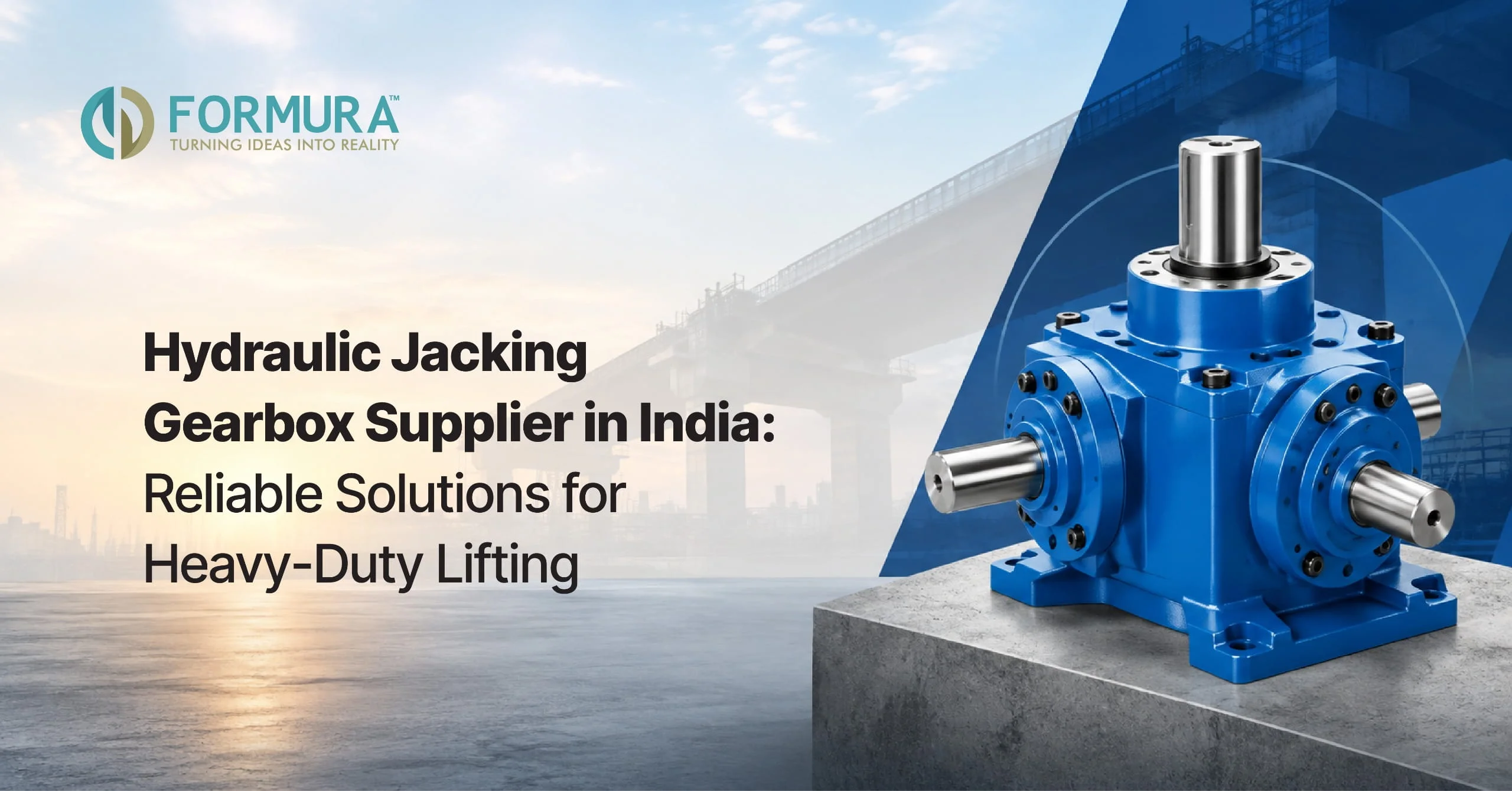
Heavy-duty lifting applications demand more than just power. They require precision, stability, reliability, and consistent performance. Whether the job involves lifting industrial machinery, positioning heavy structures, maintaining equipment, or handling large engineering components, the right transmission and lifting system can make a significant difference.
This is where a hydraulic jacking gearbox plays an important role. Designed to work with hydraulic lifting systems, these gearboxes help transmit and manage mechanical power while providing controlled movement for demanding lifting operations.
For businesses looking for dependable equipment, choosing the right hydraulic jacking gearbox supplier in India is just as important as selecting the gearbox itself. A good supplier should understand your application, load requirements, operating conditions, and performance expectations before recommending a suitable solution.
In this guide, we'll discuss hydraulic jacking gearboxes in detail, including their features, benefits, applications, selection factors, and why working with an experienced Indian supplier can be a smart choice for industrial projects.
What Is a Hydraulic Jacking Gearbox?
A hydraulic jacking gearbox is a mechanical transmission component used as part of a hydraulic or mechanically assisted lifting arrangement. It helps transfer torque and control mechanical movement so that heavy loads can be lifted, lowered, or positioned in a controlled manner.
The gearbox works with the broader hydraulic jacking system to provide the required mechanical advantage and controlled motion. Depending on the design, it may be used in systems where high torque, controlled speed, and dependable operation are essential.
These gearboxes can be designed in different configurations to meet specific requirements, including:
- Load capacity
- Torque requirements
- Speed ratio
- Lifting stroke
- Operating cycle
- Installation space
- Mounting arrangement
- Environmental conditions
Because every industrial application is different, the gearbox should be selected based on the complete system rather than simply choosing a product based on its size or price.
Why Is a Hydraulic Jacking Gearbox Important?
Imagine trying to lift several tonnes of machinery with a system that does not provide sufficient torque or movement control. Even if the hydraulic power unit is capable of generating the required pressure, an unsuitable transmission arrangement can compromise the overall performance of the lifting system.
A properly selected gearbox helps ensure that the available power is converted into useful mechanical movement. It can contribute to:
- Controlled lifting
- Suitable torque transmission
- Reliable load handling
- Smooth mechanical operation
- Consistent performance
- Improved positioning
- Efficient power transmission
For demanding applications, the gearbox becomes an important link between the power source and the actual lifting mechanism.
Key Features of Hydraulic Jacking Gearboxes
A quality hydraulic jacking gearbox supplier in India should be able to provide solutions engineered around the requirements of the application. Here are some important features to consider.
1. High Torque Transmission
Heavy-duty lifting requires substantial torque. Hydraulic jacking gearboxes can be designed to transmit the required torque from the drive system to the lifting mechanism.
Proper torque capacity helps the system handle demanding lifting conditions without placing unnecessary stress on the gearbox components.
2. Compact Construction
Industrial facilities often have limited installation space. A compact gearbox design can make integration easier while still providing the required performance.
The exact dimensions depend on the required torque, ratio, mounting arrangement, and application.
3. Controlled Output Speed
Different lifting applications require different operating speeds. A gearbox can be selected with an appropriate reduction ratio to achieve the desired output speed.
Controlled output speed is particularly useful when loads need to be positioned carefully.
4. Robust Gear Construction
Gearboxes used in heavy-duty environments need to withstand repeated mechanical loads.
Quality gear materials, accurate machining, appropriate heat treatment, and suitable manufacturing processes can improve durability and operational reliability.
5. Reliable Bearings and Shafts
Bearings and shafts are critical components within a gearbox. They must be appropriately selected for the expected loads, torque, speed, and operating conditions.
A well-engineered system considers these components as part of the complete transmission design rather than treating them as isolated parts.
6. Efficient Power Transmission
A properly matched gearbox can help transfer power efficiently from the hydraulic drive arrangement to the lifting mechanism. Better power transmission can contribute to smoother operation and reduced mechanical losses.
7. Customizable Configuration
Industrial applications rarely follow a one-size-fits-all approach. Depending on the manufacturer, hydraulic jacking gearboxes may be customized according to:
- Torque
- Gear ratio
- Shaft configuration
- Mounting arrangement
- Dimensions
- Output requirements
- Operating environment
8. Suitable Lubrication System
Proper lubrication is essential for reducing friction and wear between moving components. The gearbox should use an appropriate lubricant and lubrication arrangement according to the manufacturer's recommendations and operating conditions.
9. Heavy-Duty Housing
A robust housing protects internal components while providing structural support for the gearbox. The housing material and design should be selected according to the operating environment and expected mechanical loads.
10. Application-Specific Engineering
One of the most valuable features to look for is engineering support. A reliable supplier should be able to understand the complete lifting application and recommend an appropriate gearbox rather than simply selling a standard unit.
Benefits of Hydraulic Jacking Gearboxes
Using a properly designed hydraulic jacking gearbox can offer several advantages for industrial lifting operations.
Improved Load Handling
The right gearbox allows the lifting system to transmit the required torque effectively. This makes it suitable for applications involving heavy machinery, structures, and industrial equipment.
Better Lifting Control
Controlled gearbox output can help manage lifting movement more effectively. This is important when heavy loads need to be positioned accurately.
Increased Operational Reliability
A gearbox manufactured using appropriate materials and engineering practices can provide dependable performance over repeated operating cycles.
Longer Equipment Life
Proper gear design, lubrication, bearings, shafts, housing, and manufacturing quality can help reduce premature wear and extend service life.
Reduced Mechanical Stress
An appropriately selected gear ratio can help match the input power and output requirements of the lifting mechanism, reducing unnecessary mechanical stress.
Greater Application Flexibility
Customized gearbox configurations allow the equipment to be adapted to different industrial lifting requirements.
Easier System Integration
A gearbox designed with the correct mounting and shaft configuration can simplify integration with the existing hydraulic jacking system.
Better Maintenance Planning
A well-designed gearbox with accessible components and clearly defined maintenance requirements can make inspection and servicing more manageable.
Applications of Hydraulic Jacking Gearboxes
Hydraulic jacking gearboxes are suitable for a wide range of industrial and engineering applications.
Heavy Machinery Lifting
Manufacturing facilities frequently need to lift or reposition heavy machinery during installation, maintenance, or replacement. A suitable hydraulic jacking gearbox can form part of a controlled lifting arrangement for these activities.
Industrial Equipment Installation
Large equipment often needs to be positioned accurately during installation. Controlled lifting systems can help engineers achieve the required positioning without relying solely on cranes or other equipment.
Construction Projects
Construction applications may involve lifting structural components, equipment, platforms, and other heavy loads. Customized lifting arrangements can be developed according to the specific requirements of the project.
Bridge and Infrastructure Work
Infrastructure projects often involve large structures and components that require controlled lifting during construction, repair, or maintenance.
Steel and Fabrication Industries
Steel plants and fabrication facilities handle heavy components regularly. Hydraulic lifting systems supported by appropriate gearboxes can assist with material positioning and equipment maintenance.
Power Generation Facilities
Power plants contain large machinery and components that may need to be lifted during installation or maintenance.
Shipbuilding and Marine Engineering
Large marine components require careful handling and positioning. Depending on the application, specialized hydraulic lifting arrangements can be used.
Maintenance and Repair Operations
During maintenance, equipment may need to be raised to access components underneath or to replace worn parts. A suitable jacking system can make these operations more controlled and organized.
How Does a Hydraulic Jacking Gearbox Work?
The basic working principle is relatively straightforward. A hydraulic power unit generates hydraulic pressure and flow, which drives a hydraulic motor or another suitable actuator. The mechanical output from the drive is then transmitted through the gearbox.
The gearbox modifies the available torque and speed according to its gear ratio and design. The resulting mechanical output is used to operate the lifting mechanism. In simple terms:
Hydraulic power → Hydraulic motor/drive → Gearbox → Lifting mechanism → Controlled load movement
The actual configuration can vary considerably depending on the application and equipment design.
Hydraulic Jacking Gearbox Supplier in India: Why Choose an Experienced Supplier?
India has a large and growing industrial manufacturing sector, making it possible to source specialized power transmission and lifting components locally. However, not every supplier offers the same level of technical expertise.
An experienced hydraulic jacking gearbox supplier in India should ideally provide more than a product catalogue. They should be able to help you understand which gearbox configuration is appropriate for your application. A capable supplier can assist with:
- Technical consultation
- Gearbox selection
- Torque calculations
- Gear ratio selection
- Mounting configuration
- Shaft design
- Application engineering
- Custom manufacturing
- Quality inspection
- Installation guidance
- Maintenance support
- Spare parts availability
This type of support can be especially valuable for customized industrial lifting projects.
How to Choose the Right Hydraulic Jacking Gearbox Supplier
Choosing a supplier should not be based only on price. A gearbox is a critical mechanical component, and the wrong specification can affect the performance of the entire lifting system. Consider these factors before making your decision.
Manufacturing Experience
Look for suppliers with proven experience in gearboxes, power transmission equipment, or industrial lifting systems. Experience with similar applications can be a major advantage.
Engineering Expertise
Ask whether the supplier has an engineering team capable of evaluating:
- Torque
- Speed
- Gear ratio
- Load requirements
- Duty cycle
- Mounting conditions
- Environmental factors
Product Quality
Check the quality of the gears, shafts, bearings, housing, seals, and other components. Manufacturing accuracy and material selection can have a significant impact on gearbox performance.
Customization Capabilities
If you have unique requirements, choose a supplier that can manufacture or modify the gearbox according to your application.
Testing and Inspection
Quality inspection should be an important part of the manufacturing process. Depending on the gearbox, inspection may include dimensional checks, gear inspection, assembly checks, and operational testing.
After-Sales Support
A supplier's responsibility should ideally continue after delivery. Technical assistance, maintenance guidance, spare parts, and troubleshooting support can be valuable throughout the gearbox's service life.
Factors to Consider Before Buying a Hydraulic Jacking Gearbox
Before contacting a supplier, gather the technical information available about your application. Important details include:
Load Capacity
Determine the maximum load the lifting system needs to handle.
Required Torque
Torque is one of the most important parameters for gearbox selection. The supplier should calculate or verify the required torque based on the complete system.
Input Speed
The gearbox must be compatible with the speed provided by the hydraulic motor or drive system.
Output Speed
Determine how quickly the lifting mechanism needs to operate.
Gear Ratio
The required reduction ratio depends on the input speed, output speed, and torque requirements.
Duty Cycle
Consider how frequently the gearbox will operate and how long each operating cycle will last.
Operating Environment
Temperature, dust, moisture, chemicals, outdoor exposure, and other environmental factors can influence the gearbox design.
Mounting Requirements
Available space and mounting orientation should be considered before selecting the gearbox.
Maintenance Requirements
Ask the supplier about recommended lubrication, inspection intervals, spare parts, and expected maintenance procedures.
Maintenance Tips for Hydraulic Jacking Gearboxes
Even a high-quality gearbox requires proper maintenance. Following the manufacturer's maintenance recommendations can help preserve performance and extend service life. Some general practices include:
- Check lubricant levels regularly.
- Use the recommended lubricant.
- Inspect for oil leakage.
- Monitor unusual noise or vibration.
- Check gear teeth for abnormal wear.
- Inspect shafts and bearings.
- Check seals and housings.
- Inspect mounting bolts.
- Keep the gearbox clean.
- Avoid exceeding the rated load and operating limits.
If unusual noise, excessive vibration, overheating, leakage, or unexpected movement occurs, the equipment should be inspected by a qualified professional before continued operation.
Common Mistakes When Selecting a Hydraulic Jacking Gearbox
Selecting a gearbox solely based on price is one of the most common mistakes. Other mistakes include:
Choosing an Incorrect Gear Ratio
A gear ratio that does not match the application can result in inadequate output speed or torque.
Ignoring Duty Cycle
A gearbox designed for occasional operation may not be suitable for continuous or high-frequency applications.
Overlooking the Environment
Outdoor, dusty, humid, or high-temperature environments may require specific seals, lubrication, housing, or protection.
Not Considering Future Requirements
If the equipment may eventually operate at higher loads or longer duty cycles, discuss these possibilities with the supplier before finalizing the design.
Failing to Verify Compatibility
The gearbox must be compatible with the hydraulic motor, coupling, shafts, lifting mechanism, and mounting arrangement.
Hydraulic Jacking Gearbox Supplier in India: Quality Over Price
When purchasing industrial equipment, it can be tempting to select the lowest-cost option. However, the initial purchase price is only one part of the total cost. A low-quality gearbox can lead to:
- Frequent maintenance
- Unexpected downtime
- Component replacement
- Reduced productivity
- Higher operating costs
- Difficult troubleshooting
A quality gearbox may have a higher initial investment but can provide better reliability and long-term value when properly designed and maintained.
The goal should therefore be to find the right balance between price, performance, quality, service, and reliability.
Why Indian Manufacturers and Suppliers Can Be a Practical Choice
Working with an Indian hydraulic jacking gearbox supplier can provide several practical advantages for businesses operating in India. These can include:
- Local technical support
- Easier communication
- Faster coordination
- Customized manufacturing
- Easier access to spare parts
- Reduced logistics complexity
- Competitive manufacturing costs
- Better understanding of local industrial requirements
For companies that require customized equipment, working directly with a domestic supplier can also make technical discussions and modifications more convenient.
Frequently Asked Questions
What is a hydraulic jacking gearbox?
A hydraulic jacking gearbox is a mechanical transmission component used within hydraulic lifting systems to transfer torque and control the speed and mechanical output required for lifting applications.
What is a hydraulic jacking gearbox used for
It can be used in heavy machinery lifting, industrial equipment installation, construction, infrastructure projects, maintenance operations, power plants, steel industries, and other heavy-duty applications.
How do I choose a hydraulic jacking gearbox?
Consider the required load, torque, input speed, output speed, gear ratio, duty cycle, mounting arrangement, operating environment, and lifting mechanism. A qualified supplier can help determine the appropriate specification.
Can hydraulic jacking gearboxes be customized?
Yes. Depending on the manufacturer, gearboxes can be customized for specific torque, ratio, shaft, mounting, dimensions, and application requirements.
What should I look for in a supplier?
Look for manufacturing experience, engineering expertise, product quality, customization capabilities, testing procedures, technical support, spare parts availability, and after-sales service.
Are hydraulic jacking gearboxes suitable for heavy-duty applications?
They can be designed for heavy-duty applications when properly specified, manufactured, installed, and operated within their rated limits.
How can I extend gearbox life?
Regular lubrication, proper inspection, correct loading, monitoring for abnormal noise or vibration, and following the manufacturer's maintenance schedule can help extend gearbox service life.
Conclusion
A hydraulic jacking system is only as reliable as the components that support it. The gearbox plays an important role in transferring power, managing torque, controlling movement, and supporting reliable lifting performance.
For companies searching for a hydraulic jacking gearbox supplier in India, the best approach is to look beyond the product price. Consider the supplier's engineering capabilities, manufacturing quality, customization options, testing procedures, technical expertise, and after-sales support.
Whether you need a gearbox for machinery installation, infrastructure work, manufacturing, power generation, construction, or another heavy-duty application, the right solution should be selected around your actual operating requirements.
A reliable supplier will take the time to understand your application and help you choose a gearbox that delivers the right combination of strength, precision, efficiency, durability, and long-term performance.
When the lifting job involves heavy loads and little room for error, choosing the right gearbox and the right supplier can make all the difference.