Offshore Jacking System Service Provider in India: Reliable Solutions for Marine and Offshore Operations
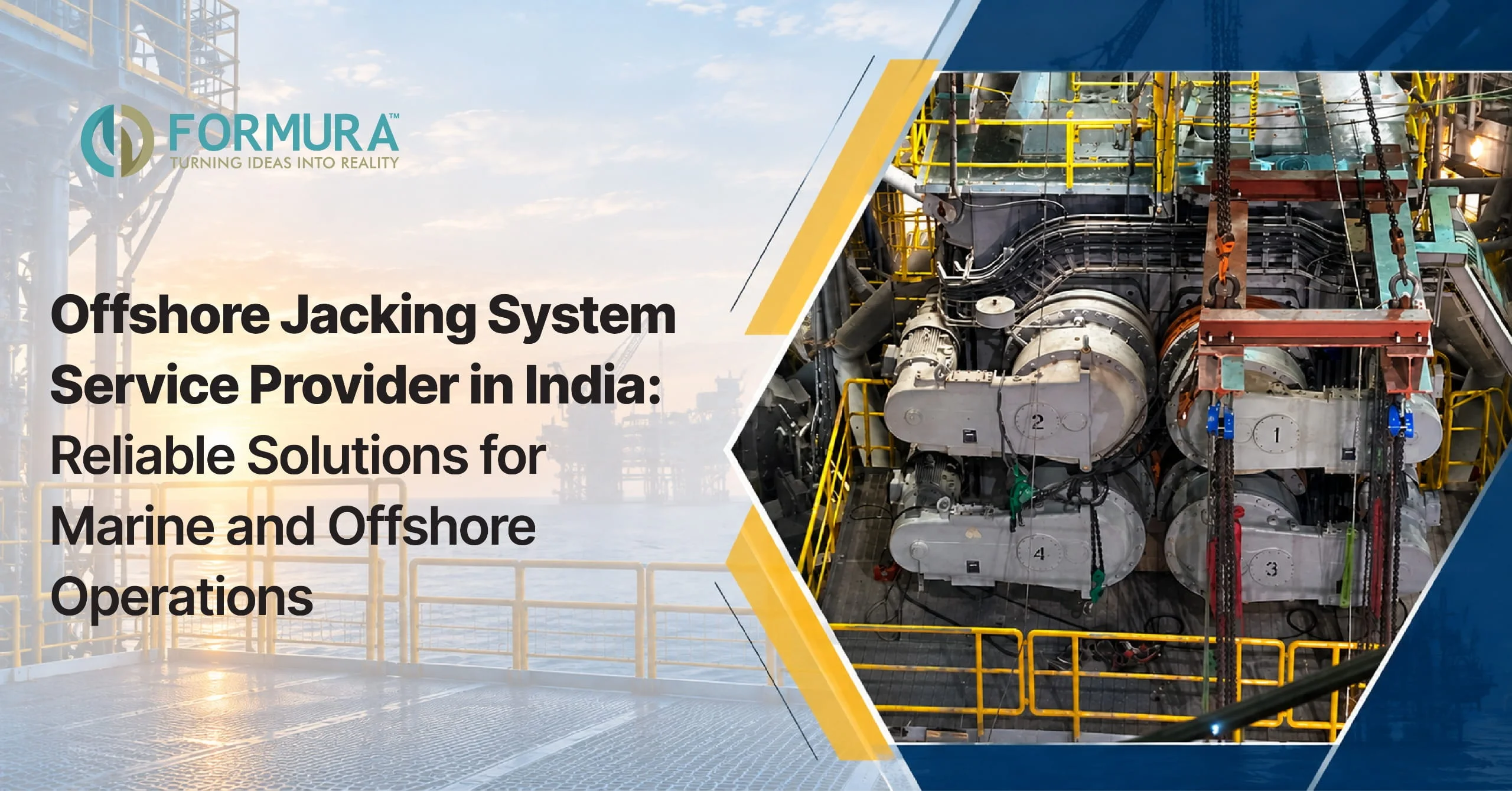
Offshore projects leave very little room for error. Whether it is the installation of offshore platforms, maintenance of marine structures, positioning of heavy equipment, or lifting and leveling operations, every movement needs to be carefully planned and executed.
This is where a reliable offshore jacking system service provider in India becomes an important part of the project team.
Offshore jacking systems are engineered to move, lift, support, level, and position extremely heavy structures under demanding marine conditions. Unlike conventional lifting equipment, these systems are designed for controlled and precise movement where stability, synchronization, load distribution, and safety are critical.
For offshore contractors, EPC companies, marine operators, shipyards, and infrastructure companies, choosing the right service provider can make a significant difference in project efficiency, safety, and overall cost.
In this guide, we will explore offshore jacking systems, their applications, key features, benefits, service considerations, and how to select the right offshore jacking system service provider in India.
What Is an Offshore Jacking System?
An offshore jacking system is a specialized hydraulic or mechanical equipment arrangement used to lift, lower, level, position, or support heavy offshore structures. These systems typically use hydraulic cylinders, power units, control systems, pumps, valves, hoses, sensors, and synchronization mechanisms to achieve controlled movement. Depending on the project, jacking systems can be configured for different load capacities and operating conditions. The system may be used to:
- Lift heavy offshore structures
- Position marine equipment
- Level large structures
- Support platforms during installation
- Raise or lower components
- Assist with offshore construction
- Perform structural maintenance
- Move heavy equipment in shipyards
- Carry out controlled load transfers
The biggest advantage is control. Instead of relying entirely on conventional cranes or lifting arrangements, hydraulic jacking technology can distribute loads across multiple lifting points and provide controlled movement.
Why Offshore Jacking Systems Are Important
Offshore environments are fundamentally different from ordinary construction sites. Wind, waves, tides, limited working space, uneven loads, corrosion, and difficult access can all affect operations. A lifting or positioning solution that works perfectly on land may not be suitable for an offshore application. A professionally designed jacking system helps address these challenges. For example, when a structure needs to be lifted by several hydraulic cylinders simultaneously, even a small difference in cylinder movement can create uneven loading.
A synchronized hydraulic control system can help maintain coordinated movement across multiple points. This becomes particularly important when handling high-value offshore assets.
Precision is not simply a convenience in offshore work—it can be a safety and project-control requirement.
What Does an Offshore Jacking System Service Provider Do?
An experienced service provider does much more than supply hydraulic jacks. A professional offshore jacking system company can support the project from the initial engineering stage through installation, operation, monitoring, and completion. Typical services may include:
1. Jacking System Design
Every offshore project has different load requirements, structural configurations, lifting points, and environmental conditions. A service provider evaluates these requirements and develops a suitable jacking configuration.
2. Load Analysis
Before the system is deployed, engineers determine how loads will be distributed across the jacking points. This helps establish:
- Required cylinder capacity
- Number of jacking points
- Stroke requirements
- Hydraulic pressure requirements
- Load distribution
- Structural support requirements
3. Hydraulic Power Unit Selection
The hydraulic power unit is a critical component of the overall system. The provider selects or configures the appropriate power unit based on the required pressure, flow, number of cylinders, and movement speed.
4. Installation and Setup
Offshore jacking equipment must be installed correctly. A professional team can assist with:
- Cylinder positioning
- Hydraulic connections
- Control system installation
- Instrumentation
- Load monitoring
- System testing
5. Synchronised Jacking
For multi-point lifting operations, synchronization is extremely important. The system can be configured to control multiple hydraulic cylinders together, helping achieve a more balanced lifting or lowering process.
6. On-Site Technical Support
Offshore operations can change quickly. Having experienced technical personnel available during critical operations can help identify issues early and keep the project moving.
7. Maintenance and Inspection
Regular inspection of cylinders, hoses, valves, pumps, sensors, control systems, and other components helps maintain operational reliability.
Key Features of a Professional Offshore Jacking System
When evaluating an offshore jacking system service provider in India, it is important to look beyond basic lifting capacity. The system should be suitable for the actual operating environment and project requirements. Here are some important features to consider.
1. High Load Capacity
Offshore structures can weigh hundreds or thousands of tonnes. Jacking systems can be configured using multiple hydraulic cylinders to achieve the required lifting capacity. The actual capacity should always be determined through engineering calculations rather than simply selecting the largest available jack.
2. Multi-Point Jacking
Large structures often require lifting from multiple locations. Multi-point jacking allows the load to be distributed across several lifting points. This can be particularly useful for:
- Offshore platforms
- Bridges and marine structures
- Ship components
- Heavy machinery
- Modular structures
- Large steel assemblies
3. Hydraulic Synchronization
Synchronization is one of the most valuable features of an advanced jacking system. The system coordinates the movement of multiple hydraulic cylinders so that the structure can be raised or lowered in a controlled manner. This can reduce the possibility of excessive differential movement between lifting points.
4. Load Monitoring
Modern systems can incorporate pressure sensors, load cells, position sensors, and digital monitoring systems. Operators can use this information to monitor:
- Hydraulic pressure
- Cylinder position
- Applied load
- Movement
- Differential levels
- System performance
Better visibility allows engineers and operators to make informed decisions during critical lifting operations.
5. Remote or Centralized Control
Depending on the project requirements, hydraulic jacking systems can be operated from a centralized control station. This allows operators to manage several cylinders from one location instead of manually controlling each unit.
6. Precise Movement Control
Offshore structures often need to be moved by very small increments. A properly configured hydraulic system provides controlled movement, making it suitable for precision positioning and leveling applications.
7. Robust Construction
Offshore equipment operates in demanding environments. Equipment may be exposed to:
- Saltwater
- Humidity
- Wind
- Temperature variations
- Heavy loads
- Continuous operation
Therefore, components should be selected with the offshore environment in mind.
8. Safety Features
Safety should be built into the system rather than treated as an afterthought. Depending on the equipment and project, safety features can include:
- Pressure relief systems
- Load monitoring
- Overload protection
- Emergency stop functions
- Mechanical locking arrangements
- Controlled lowering
- Hydraulic isolation
- Position monitoring
The exact safety arrangement should be determined according to the project's engineering and risk assessment.
Applications of Offshore Jacking Systems
Offshore jacking systems have a wide range of applications across marine, oil and gas, renewable energy, shipbuilding, and heavy infrastructure projects.
Offshore Platform Installation
Jacking systems can assist in positioning, leveling, lifting, and supporting components associated with offshore platforms. Precision is particularly important when different structural components need to be aligned before final installation.
Offshore Platform Maintenance
Maintenance activities sometimes require structures or heavy components to be lifted temporarily. Hydraulic jacking systems can provide controlled lifting and support during these activities.
Shipbuilding and Ship Repair
Shipyards frequently deal with extremely heavy components. Jacking systems can be used for controlled lifting and positioning of:
- Ship sections
- Engines
- Heavy machinery
- Structural components
- Marine equipment
Offshore Wind Projects
The offshore renewable energy sector increasingly involves massive components. Jacking solutions may be used during certain installation, maintenance, and positioning operations involving offshore wind infrastructure.
Heavy Equipment Positioning
Offshore facilities contain pumps, generators, compressors, transformers, and other heavy machinery. Hydraulic jacking can assist with accurate positioning where conventional lifting methods are difficult or impractical.
Structural Leveling
A structure may require precise leveling after installation or during maintenance. Multi-point hydraulic jacking can allow engineers to make controlled adjustments at different support points.
Load Transfer Operations
In some heavy engineering projects, a structure needs to be transferred from one support arrangement to another. Jacking systems can provide controlled lifting during the transfer process.
Benefits of Choosing a Professional Offshore Jacking System Service Provider
Working with an experienced provider offers benefits that extend beyond the equipment itself.
1. Improved Operational Safety
Offshore lifting operations involve substantial risks. Professional engineering, equipment selection, inspection, and operational support can help reduce avoidable risks.
2. Better Load Control
Multi-point hydraulic systems allow engineers to monitor and control loads across different lifting locations. This is especially valuable for complex structures.
3. Greater Precision
When a structure needs to move by only a few millimeters or centimeters, precision becomes essential. Controlled hydraulic movement can make these operations more manageable.
4. Reduced Equipment Downtime
Reliable equipment and proper technical support can help reduce unnecessary delays caused by equipment problems or incorrect system configuration. For offshore projects, this can be financially important because vessel and crew costs can be significant.
5. Customized Solutions
There is no universal offshore jacking system suitable for every project. A professional provider can customize the system around:
- Load requirements
- Available space
- Lifting points
- Required stroke
- Operating environment
- Structural limitations
- Project schedule
6. Better Project Efficiency
A well-planned jacking operation can simplify complex lifting and positioning activities. This can help contractors complete critical stages of a project more efficiently.
7. Technical Expertise
Offshore jacking is not simply about connecting a hydraulic pump to a cylinder. It involves engineering calculations, structural considerations, hydraulic design, load management, synchronization, risk assessment, and operational planning. An experienced service provider brings this knowledge to the project.
Offshore Jacking System vs Conventional Lifting Methods
Conventional cranes are extremely useful for many offshore operations, but they may not always be the most practical solution.
| Factor | Offshore Jacking System | Conventional Crane |
|---|---|---|
| Multi-point lifting | Excellent | More complex |
| Precise leveling | Excellent | Limited |
| Controlled incremental movement | Excellent | More difficult |
| Space requirements | Can be compact | May require significant space |
| Load distribution | Across multiple points | Usually concentrated |
| Heavy structural positioning | Highly suitable | Suitable depending on crane capacity |
| Synchronization | Available | More complex |
The right solution depends on the project. In some situations, cranes and jacking systems may even be used together.
How to Choose the Right Offshore Jacking System Service Provider in India
Selecting a provider should involve more than comparing quotations. Here are some important factors to evaluate.
1. Industry Experience
Look for a company with experience in hydraulic lifting, heavy engineering, marine applications, or offshore projects. Experience matters because offshore operations often involve unusual technical challenges.
2. Engineering Capability
Ask whether the provider has qualified engineers capable of handling:
- Load calculations
- Jacking plans
- Hydraulic system design
- Structural assessment
- Risk evaluation
- Equipment selection
A provider that only rents equipment may not offer the same level of engineering support as a full-service specialist.
3. Equipment Quality
Check the condition, capacity, specifications, and maintenance history of the equipment. Important components may include:
- Hydraulic cylinders
- Pumps
- Power packs
- Hoses
- Valves
- Control units
- Sensors
- Load cells
- Monitoring systems
4. Safety Procedures
Ask about the provider's inspection and testing procedures. A professional company should be able to explain how it manages equipment safety, system testing, operational procedures, and emergency scenarios.
5. Customization
Your provider should be willing to understand the project before recommending equipment. Be cautious of companies that immediately recommend a standard system without reviewing the load and operating conditions.
6. Technical Support
Find out whether technical personnel will be available during setup and critical operations. Offshore work can be expensive to interrupt, so responsive support can make a significant difference.
7. Documentation
Proper documentation is an important part of professional offshore operations. Depending on the project, documentation may include:
- Equipment specifications
- Inspection certificates
- Test certificates
- Hydraulic schematics
- Load calculations
- Method statements
- Risk assessments
- Operating procedures
- Maintenance records
Why India Is Becoming an Important Market for Offshore Engineering Services
India has a growing marine and offshore engineering ecosystem supported by its extensive coastline, shipbuilding capabilities, ports, oil and gas activities, infrastructure development, and renewable energy projects.
As offshore construction becomes more sophisticated, the demand for specialized heavy lifting and hydraulic engineering services is also increasing. Indian service providers can offer an attractive combination of technical expertise, engineering support, equipment availability, and cost efficiency.
For international contractors operating in Indian waters or companies executing large marine projects in the region, working with a capable offshore jacking system service provider in India can provide valuable local technical support.
The Importance of Hydraulic Jacking System Maintenance
Even the best equipment requires regular maintenance. Hydraulic systems should be inspected and maintained according to the manufacturer's requirements and the project's operational conditions. Common maintenance areas include:
Hydraulic Cylinders
Inspect cylinders for:
- Leakage
- Damage
- Corrosion
- Seal condition
- Rod condition
Hydraulic Hoses
Hoses should be checked for:
- Cracks
- Abrasion
- Leakage
- Fitting damage
- Excessive wear
Hydraulic Power Units
Power units should be inspected for:
- Oil condition
- Pressure performance
- Pump condition
- Filters
- Electrical components
- Cooling systems
Control Systems
Sensors, controllers, cables, valves, and monitoring equipment should also be tested regularly. Preventive maintenance can help identify problems before they affect a critical offshore operation.
Offshore Jacking System Safety Considerations
Heavy lifting should never be treated as a routine activity. Before beginning an offshore jacking operation, the project team should establish an appropriate engineering and safety plan. Important considerations can include:
- Structural capacity
- Load distribution
- Lifting points
- Environmental conditions
- Hydraulic pressure
- Equipment capacity
- Cylinder stroke
- Stability
- Emergency procedures
- Communication protocols
- Personnel responsibilities
Weather and sea conditions should also be monitored when applicable. Most importantly, the system should never be operated beyond its engineered limits.
How an Offshore Jacking Project Typically Works
Although each project is different, a typical process may look like this:
Step 1: Project Assessment
The service provider studies the structure, load, dimensions, lifting points, site conditions, and operational requirements.
Step 2: Engineering Design
The appropriate hydraulic cylinders, power units, controls, monitoring equipment, and accessories are selected.
Step 3: Load Analysis
Engineers determine expected loads and verify that the proposed arrangement is suitable.
Step 4: Equipment Preparation
Equipment is inspected, tested, and prepared for deployment.
Step 5: Site Installation
The jacking system is positioned and hydraulically connected.
Step 6: System Testing
The team checks hydraulic pressure, connections, sensors, controls, and communication systems.
Step 7: Controlled Jacking
The structure is lifted, lowered, positioned, or leveled according to the approved procedure.
Step 8: Monitoring
Loads, movement, pressure, and structural behavior are monitored throughout the operation.
Step 9: Final Positioning
Once the required position is achieved, the structure is secured according to the project's engineering plan.
Step 10: Demobilization
After completion, equipment is safely removed and inspected.
Industries That Can Benefit From Offshore Jacking Services
Offshore jacking technology can support a variety of industries, including:
- Oil and gas
- Offshore wind energy
- Shipbuilding
- Ship repair
- Marine construction
- Port infrastructure
- Heavy engineering
- Offshore infrastructure
- Industrial construction
- Power generation
- Renewable energy
- EPC projects
The exact application depends on the structural and operational requirements of the project.
Why Customized Offshore Jacking Solutions Matter
Every offshore project comes with its own challenges. A jack suitable for one project may be completely unsuitable for another. For example, two structures may have similar weights but very different lifting requirements because of their dimensions, center of gravity, support points, structural strength, or available working space.
That is why a good provider starts with the engineering problem, not the equipment catalogue. The goal is not simply to provide the biggest jack. The goal is to create a system that can perform the required operation safely, precisely, and efficiently.
Cost Factors for Offshore Jacking System Services in India
The cost of offshore jacking services varies considerably from project to project. Factors that can influence the overall cost include:
- Required lifting capacity
- Number of hydraulic cylinders
- Equipment rental or purchase
- Project duration
- Offshore location
- Mobilization and transportation
- Engineering requirements
- Installation requirements
- Number of operators
- Monitoring systems
- Special accessories
- Testing and certification
- Maintenance requirements
For this reason, a professional provider should ideally conduct a technical assessment before giving a final quotation. Choosing the cheapest quotation may not always result in the lowest project cost. Equipment reliability, technical support, safety, and downtime can have a much greater financial impact during offshore operations.
Questions to Ask an Offshore Jacking System Service Provider
Before finalizing a service provider, consider asking:
- What maximum load capacity can your system handle?
- Do you provide customized jacking solutions?
- Do you offer multi-point synchronized jacking?
- Can you provide load monitoring?
- Do you provide on-site technical support?
- What inspection and testing procedures do you follow?
- Can you provide equipment documentation?
- Do you have experience with offshore or marine projects?
- How do you handle equipment mobilization?
- What emergency support is available during the operation?
The answers can help you distinguish between an equipment supplier and a genuine engineering service provider.
Features and Benefits at a Glance
| Feature | Benefit |
|---|---|
| Hydraulic lifting technology | Controlled heavy lifting |
| Multi-point jacking | Better load distribution |
| Synchronization | Coordinated movement |
| Load monitoring | Improved operational visibility |
| Precision control | Accurate positioning and leveling |
| Robust equipment | Suitable for demanding environments |
| Customized configuration | Better project compatibility |
| Technical support | Faster problem resolution |
| Preventive maintenance | Improved equipment reliability |
| Engineering assistance | Better planning and risk management |
Why Choose an Experienced Offshore Jacking System Service Provider in India?
When a project involves heavy structures and offshore conditions, experience can make a substantial difference. A professional service provider should bring together engineering knowledge, reliable hydraulic equipment, experienced technicians, safety procedures, and responsive project support.
The ideal partner should understand that offshore jacking is not just an equipment requirement. It is an integrated engineering operation where every component—from the cylinder and hydraulic power unit to the control system and lifting point, needs to work together. With the right service provider, businesses can approach complex lifting, leveling, positioning, and load-transfer operations with greater confidence.
Frequently Asked Questions
What is an offshore jacking system?
An offshore jacking system is specialized hydraulic or mechanical equipment used to lift, lower, position, level, or support heavy marine and offshore structures.
Where are offshore jacking systems used?
They are used in offshore platforms, shipyards, marine construction, offshore wind projects, heavy engineering, equipment installation, structural maintenance, and load-transfer operations.
What should I look for in an offshore jacking system service provider in India?
Look for engineering expertise, quality equipment, offshore experience, load-monitoring capabilities, synchronization technology, safety procedures, documentation, and on-site technical support.
Can offshore jacking systems lift very heavy structures?
Yes. Multiple hydraulic cylinders can be configured together to handle very high loads. The required capacity must be established through project-specific engineering calculations.
What is synchronized hydraulic jacking?
Synchronized hydraulic jacking coordinates multiple hydraulic cylinders so that they move together in a controlled manner. This helps maintain balanced movement during lifting or lowering.
Can jacking systems be customized?
Yes. Professional providers can configure systems according to load capacity, lifting points, cylinder stroke, space limitations, required movement, monitoring requirements, and project conditions.
Are offshore jacking systems suitable for shipyards?
Yes. They can be used for various shipbuilding, ship repair, equipment positioning, structural lifting, and heavy component handling applications.
How much does offshore jacking system service cost in India?
There is no fixed price because the cost depends on equipment capacity, project duration, location, engineering requirements, mobilization, technical support, and other project-specific factors.
Why is load monitoring important?
Load monitoring provides visibility into the forces being applied at different lifting points. This can help operators and engineers maintain better control during complex lifting operations.
How do I select the right offshore jacking system?
Start by assessing the structure's weight, dimensions, center of gravity, lifting points, required movement, environmental conditions, and safety requirements. A qualified service provider can then engineer the appropriate jacking configuration.
Conclusion
Offshore projects demand precision, planning, and dependable equipment. When conventional lifting methods are not practical or when a project requires controlled multi-point movement, an offshore jacking system can provide an effective solution.
From offshore platform installation and marine construction to shipbuilding, maintenance, structural leveling, and heavy equipment positioning, hydraulic jacking systems can support a wide range of demanding applications. However, the quality of the result depends heavily on choosing the right service provider.
A reliable offshore jacking system service provider in India should offer more than hydraulic equipment. Look for a partner that provides engineering design, load analysis, customized system configuration, equipment testing, installation support, synchronized control, monitoring, maintenance, and experienced technical assistance.
Ultimately, the right provider helps turn a complicated lifting operation into a planned, controlled, and professionally managed project.
If your project involves heavy offshore lifting, positioning, leveling, or load transfer, investing time in selecting the right jacking system partner can be one of the most important decisions you make before the operation begins.