Rack and Pinion Jacking System Manufacturer: Reliable Lifting Solutions for Industrial Applications
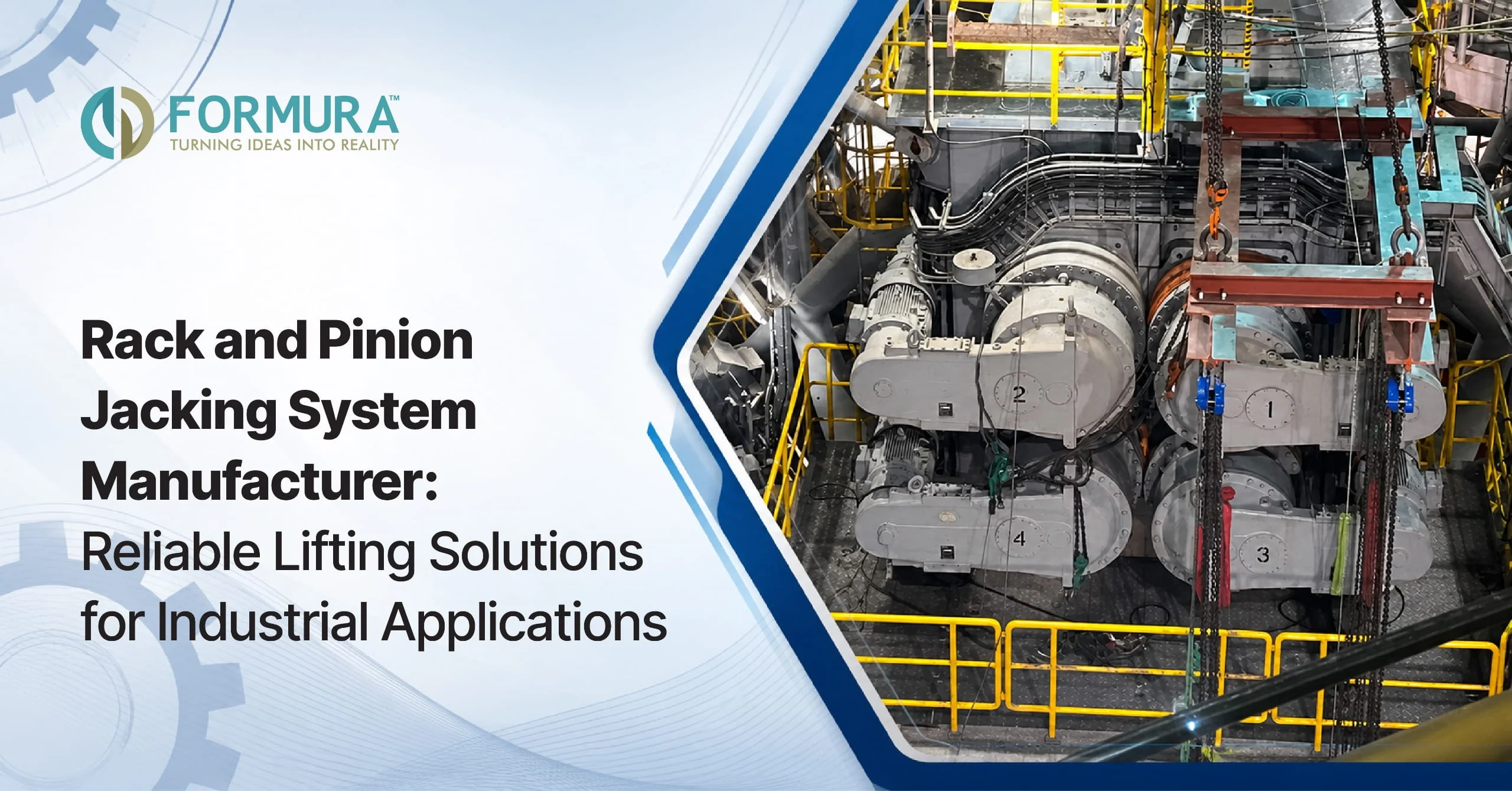
When heavy structures, platforms, bridges, machinery, and industrial equipment need to be lifted, precision and reliability are not optional, they are essential. A small lifting error can lead to equipment damage, operational delays, or serious safety concerns. This is where a rack and pinion jacking system provides a dependable solution.
A rack and pinion jacking system uses a mechanical arrangement of a toothed rack and pinion gear to provide controlled and synchronized lifting. These systems are widely used in industries where heavy loads need to be raised, lowered, positioned, or supported with accuracy.
Choosing the right rack and pinion jacking system manufacturer is therefore an important decision. A reliable manufacturer does more than supply lifting equipment. They understand the application, load requirements, operating environment, safety considerations, and customization needs before developing a suitable system.
In this guide, we will explore what rack and pinion jacking systems are, their key features and benefits, applications, and what you should consider when selecting a manufacturer.
What Is a Rack and Pinion Jacking System?
A rack and pinion jacking system is a mechanical lifting arrangement designed to move heavy loads vertically or, in certain applications, horizontally. The system consists primarily of two important components:
- Rack: A straight bar featuring precisely machined teeth.
- Pinion: A circular gear designed to engage with the teeth on the rack.
When the pinion rotates, it moves along the rack and creates controlled linear movement. Depending on the system design, multiple jacks can be connected and synchronized to lift large or unevenly distributed loads.
Unlike some conventional lifting methods, rack and pinion systems can provide precise mechanical movement and reliable positioning. This makes them suitable for demanding industrial applications where controlled lifting is required.
Why Choose a Rack and Pinion Jacking System Manufacturer?
The quality of the lifting system largely depends on the engineering and manufacturing expertise behind it. A professional manufacturer can design a solution around your specific lifting requirements rather than forcing your application to fit a standard product.
- Load calculation and capacity selection
- Jacking system configuration
- Rack and pinion design
- Gear and material selection
- Lifting stroke requirements
- Synchronization requirements
- Structural integration
- Safety mechanisms
- Customized dimensions
- Installation support
- Maintenance recommendations
This application-focused approach helps ensure that the final system performs reliably in real working conditions.
Key Features of Rack and Pinion Jacking Systems
Rack and pinion jacking systems can be engineered with different configurations depending on the application. Some of the most important features include the following.
1. Precise Mechanical Lifting
One of the biggest advantages of rack and pinion technology is its ability to provide controlled linear movement. The interaction between the rack and pinion allows the lifting process to be managed with a high degree of precision.
This is particularly useful when equipment or structures need to be positioned at a specific height.
2. High Load-Carrying Capacity
Industrial lifting applications often involve extremely heavy loads. Rack and pinion systems can be engineered to handle substantial loads when properly designed and rated.
The manufacturer can determine the required capacity based on factors such as:
- Total load weight
- Load distribution
- Number of jacking points
- Lifting height
- Operating conditions
- Required safety factors
3. Synchronized Lifting
For large structures, lifting from a single point may not be practical. Multiple jacking units can be arranged to work together, allowing different lifting points to move in coordination.
Synchronized lifting can help reduce uneven movement and maintain better control of the structure during the lifting process.
4. Robust Construction
Industrial lifting systems must withstand demanding operating environments. Quality manufacturers use suitable materials and manufacturing processes to produce racks, gears, housings, shafts, and other components capable of handling repeated loads. A robust construction can contribute to longer service life and dependable operation.
5. Customizable Design
Every industrial lifting application is different. The required load, dimensions, lifting stroke, mounting arrangement, and operating environment can vary significantly.
A reputable rack and pinion jacking system manufacturer can customize the system according to the application instead of relying solely on off-the-shelf configurations.
6. Controlled Lifting and Lowering
The system can be designed to provide controlled movement during both lifting and lowering operations. This is important when working with expensive machinery, large structures, or sensitive equipment.
Controlled movement also makes positioning easier during installation and maintenance activities.
7. Safety-Oriented Engineering
Safety should be considered from the beginning of the design process. Depending on the application, a jacking system may incorporate features such as mechanical locking arrangements, brakes, overload protection, limit switches, or other safety mechanisms.
The exact safety features should be selected according to the application and relevant engineering requirements.
8. Easy Maintenance
Well-designed systems should provide reasonable access to components that require inspection, lubrication, adjustment, or replacement.
Regular maintenance of gears, bearings, lubrication points, and other components can help maintain smooth performance and extend equipment life.
Benefits of Rack and Pinion Jacking Systems
Selecting the right lifting technology can have a direct impact on productivity, safety, maintenance, and operating costs. Here are some of the major benefits of rack and pinion jacking systems.
Improved Lifting Precision
Rack and pinion mechanisms allow operators to achieve controlled movement, which can be valuable when a load must be positioned accurately.
This precision is especially beneficial for machinery installation, structural positioning, and maintenance work.
Reliable Heavy-Duty Performance
When engineered correctly, rack and pinion systems can provide reliable performance in demanding industrial environments.
Their mechanical construction makes them suitable for applications where consistent lifting performance is required.
Better Load Control
Large loads can be difficult to handle using basic lifting equipment. A properly configured rack and pinion system can provide better control over the movement of the load. This can help minimize unwanted movement during lifting and positioning operations.
Increased Operational Efficiency
A suitable jacking system can make lifting operations more organized and efficient. Instead of relying on multiple independent lifting methods, synchronized systems can allow several lifting points to operate as part of one coordinated arrangement. This can reduce unnecessary handling and help shorten installation or maintenance processes.
Flexible Application
Rack and pinion jacking technology can be adapted to different industrial applications. Systems can be designed around specific load capacities, lifting heights, mounting requirements, and environmental conditions.
Long Service Life
High-quality materials, accurate machining, proper lubrication, and good maintenance practices can help extend the operating life of a rack and pinion jacking system.
Working with an experienced manufacturer also allows the system to be designed with durability in mind from the beginning.
Reduced Risk of Uncontrolled Movement
A properly engineered mechanical lifting system can provide greater control than improvised lifting arrangements. Safety mechanisms and controlled operation can further improve the overall reliability of the lifting process. However, every lifting system must be operated within its specified load and design limits.
Applications of Rack and Pinion Jacking Systems
Rack and pinion jacking systems can be used in a variety of industries and engineering projects.
Construction Industry
Construction projects frequently require the controlled lifting and positioning of heavy structures and components. Rack and pinion systems can be used where controlled mechanical lifting is required.
Bridge and Infrastructure Projects
Large infrastructure components can require specialized lifting solutions during construction, installation, or maintenance. Customized jacking systems can support these demanding applications.
Industrial Machinery Installation
Heavy machinery often needs to be positioned accurately during installation. A rack and pinion jacking system can provide controlled lifting and positioning.
Steel and Manufacturing Industries
Manufacturing facilities may use lifting systems for handling heavy equipment, production components, structural assemblies, and maintenance operations.
Power and Energy Projects
Power plants and energy facilities often involve large and heavy components. Specialized lifting equipment can assist during installation, replacement, and maintenance.
Shipbuilding and Marine Applications
Large marine structures and components may require controlled lifting and positioning. Depending on the application, rack and pinion technology can be incorporated into customized lifting arrangements.
Maintenance and Repair Operations
Industrial equipment sometimes needs to be lifted to access components underneath or to replace machinery parts. A suitable jacking system can make these operations more controlled and efficient.
How to Choose the Right Rack and Pinion Jacking System Manufacturer
Not all manufacturers offer the same level of engineering expertise or customization. Before selecting a supplier, consider the following factors.
Manufacturing Experience
Look for a manufacturer with experience designing and producing industrial lifting systems. Experience can be particularly valuable when your project involves unusual load requirements or challenging operating conditions.
Engineering Capabilities
A good manufacturer should be able to evaluate your application and recommend an appropriate configuration. Ask whether they provide engineering support for:
- Load calculations
- Gear design
- Structural integration
- Jack arrangement
- Synchronization
- Safety mechanisms
- Customized components
Product Quality
The quality of the rack, pinion, gears, shafts, bearings, housing, and other components directly affects system performance. Ask about material quality, machining accuracy, testing procedures, and quality-control processes.
Customization Options
If your application has specific dimensions or performance requirements, choose a manufacturer capable of developing customized solutions.
Testing and Inspection
Before putting a lifting system into operation, appropriate inspection and testing are important. Ask the manufacturer about their quality-control and testing procedures.
Technical Support
Installation, commissioning, troubleshooting, spare parts, and maintenance support can become important throughout the life of the equipment. A manufacturer that provides technical assistance can make ongoing operation easier.
Rack and Pinion Jacking System Manufacturer vs. Standard Supplier
There is an important difference between purchasing a standard lifting product and working directly with a specialized manufacturer.
A standard supplier may primarily focus on supplying an existing product. A manufacturer with engineering capabilities can evaluate your requirements and develop a system specifically for your application. This can be especially valuable when you have:
- Unusual load requirements
- Limited installation space
- Multiple lifting points
- Specific lifting heights
- Special environmental conditions
- Synchronization requirements
- Customized mounting arrangements
For complex lifting projects, technical expertise can be just as important as the equipment itself.
Important Factors to Consider Before Ordering
Before approaching a rack and pinion jacking system manufacturer, prepare as much information about your application as possible. Important details may include:
- Maximum load
- Number of lifting points
- Required lifting height
- Available installation space
- Required lifting speed
- Operating frequency
- Indoor or outdoor use
- Environmental conditions
- Power source, if applicable
- Required synchronization
- Mounting arrangement
- Safety requirements
- Installation limitations
Providing accurate information helps the manufacturer recommend a system that is appropriately sized and configured.
Why Quality Matters in Rack and Pinion Jacking Systems
Lifting equipment works under significant mechanical loads. Poor-quality components, inaccurate machining, inadequate design, or improper installation can affect system performance and safety.
A quality-focused manufacturer pays attention to the complete system rather than just individual components.
This includes selecting suitable materials, maintaining machining tolerances, ensuring proper gear engagement, designing adequate support structures, and performing appropriate inspections. In short, a dependable lifting system begins with dependable engineering.
Maintenance Tips for Rack and Pinion Jacking Systems
Regular maintenance is essential for keeping mechanical lifting equipment in good working condition. Some general maintenance practices include:
- Inspect racks and pinions regularly.
- Check gear teeth for abnormal wear or damage.
- Maintain appropriate lubrication.
- Inspect bearings and shafts.
- Check mounting bolts and structural connections.
- Look for unusual noise or vibration.
- Inspect safety mechanisms.
- Follow the manufacturer's maintenance schedule.
- Do not exceed the rated load capacity.
- Replace worn components with approved parts.
Maintenance requirements can vary depending on the system design and operating environment, so always follow the manufacturer's recommendations.
Frequently Asked Questions
What is a rack and pinion jacking system?
A rack and pinion jacking system is a mechanical lifting arrangement that uses a toothed rack and rotating pinion gear to convert rotary motion into controlled linear movement.
What are rack and pinion jacking systems used for?
They are used for controlled lifting, lowering, positioning, and supporting heavy structures, machinery, equipment, and industrial components.
Can rack and pinion jacking systems be customized?
Yes. Industrial manufacturers can design customized systems based on load capacity, lifting height, dimensions, mounting requirements, synchronization, and other application-specific requirements.
How do I select the right rack and pinion jacking system?
Start by determining the load, lifting height, number of lifting points, operating environment, lifting speed, available space, and required safety features. A qualified manufacturer can then recommend a suitable configuration.
Are rack and pinion jacking systems suitable for heavy loads?
They can be engineered for heavy-duty applications when properly designed, manufactured, installed, and operated within their specified ratings.
Why is synchronization important?
Synchronization is important when multiple jacking points are lifting the same structure. Coordinated movement helps maintain better control and can reduce uneven loading during the lifting operation.
What should I look for in a rack and pinion jacking system manufacturer?
Consider manufacturing experience, engineering capabilities, product quality, customization options, testing procedures, technical support, and after-sales service.
Conclusion
A rack and pinion jacking system is more than just a combination of gears and a lifting mechanism. It is an engineered solution designed to provide controlled, reliable, and precise movement for demanding industrial applications.
Choosing the right rack and pinion jacking system manufacturer can make a significant difference in the performance and reliability of your lifting operation. An experienced manufacturer can understand your requirements, recommend the right configuration, customize the system when necessary, and provide technical support throughout its service life.
Whether you need a solution for heavy machinery, construction, infrastructure, manufacturing, energy, or maintenance applications, investing in a properly engineered jacking system can improve lifting control, operational efficiency, and long-term reliability.
When comparing manufacturers, do not focus only on the initial purchase price. Look at engineering expertise, manufacturing quality, customization capabilities, safety considerations, testing, maintenance support, and overall value. The right partner can help you select a lifting system that is built not just to lift a load, but to perform reliably when it matters most.