The Ultimate Guide to Couplings for Heavy Machinery
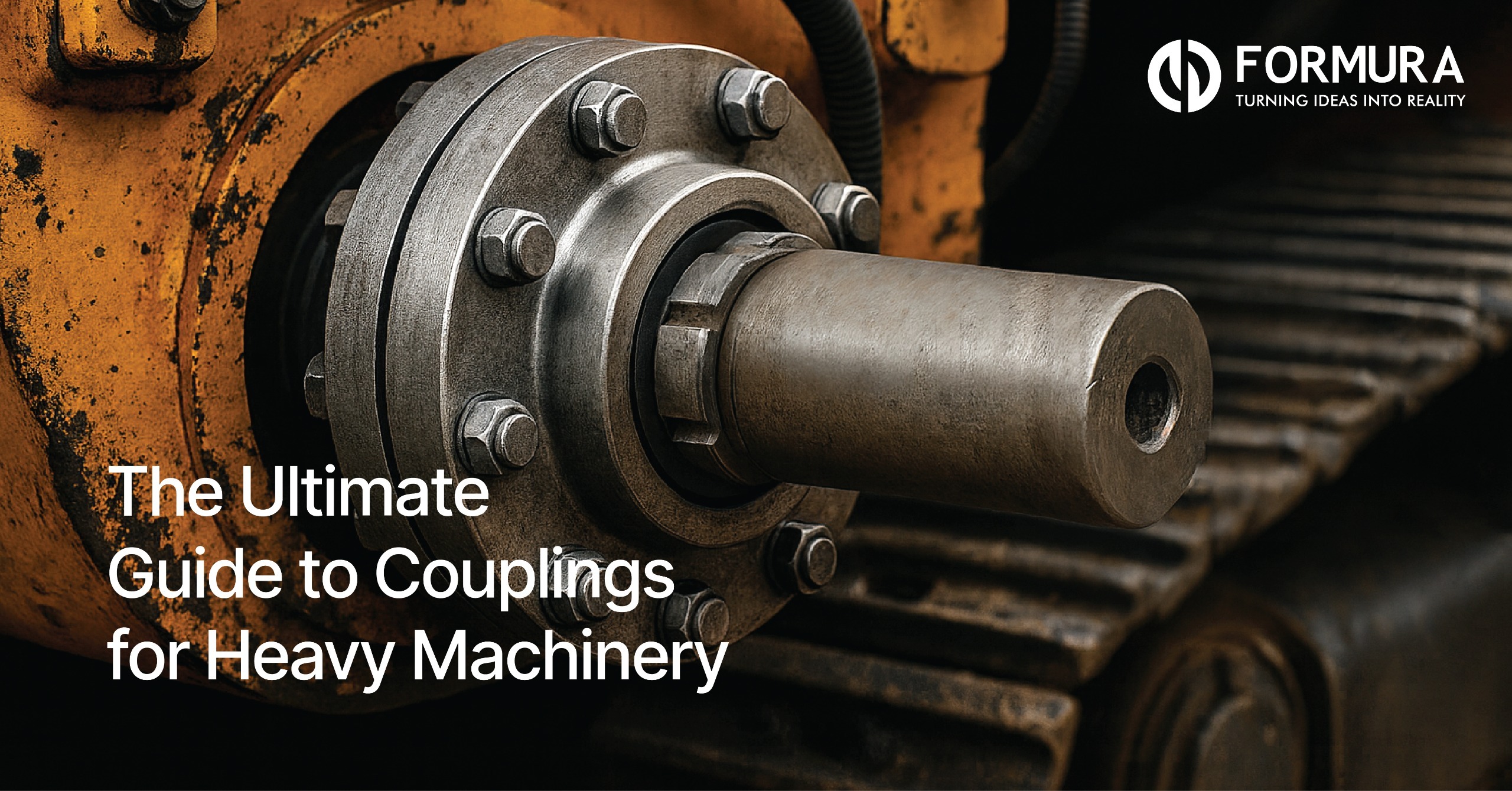
In heavy machinery—steel mills, mining, or construction—downtime is a catastrophic expense. The power train’s reliable operation relies on a critical, often-overlooked part: the industrial coupling.
This unassuming device is the unsung hero that connects two rotating shafts, ensuring power gets from the motor or engine to the working element. It must seamlessly transmit massive torque while simultaneously enduring shock loads, vibration, and inevitable shaft misalignment. This comprehensive guide will equip you with the knowledge to understand the types, selection criteria, and maintenance of couplings for heavy machinery, ensuring optimal performance and longevity.
What are Couplings and Why Do They Matter in Heavy-Duty Applications?
A shaft coupling is a power transmission component used to join two rotating shafts end-to-end for the purpose of transmitting power. They are the essential mechanical links in any heavy-duty drive system.
In demanding applications, the coupling performs four core functions:
1. Transmit Power/Torque: Its primary job is to efficiently transfer the required horsepower (HP) and torque from the driving machine (motor/engine) to the driven machine (pump/gearbox/compressor).
2. Accommodate Misalignment: No two shafts are ever perfectly aligned. Couplings compensate for unavoidable errors:
- Angular Misalignment: The shaft centerlines intersect at an angle.
- Parallel (or Radial) Misalignment: The shaft centerlines are parallel but offset.
- Axial Misalignment (End Float): Compensating for the shaft's thermal expansion or movement.
3. Compensate for End Float: Allowing for the intentional axial movement of one or both shafts (e.g., due to bearing wear or thermal changes) without causing damage.
4. Dampen Vibration & Absorb Shock Loads: Heavy-duty couplings act as a mechanical fuse and damper, protecting sensitive connected equipment (like gearboxes and bearings) from pulsating loads, impacts, and transient shocks common in industrial processes.
Key Types of Couplings for Heavy Machinery
Choosing the right industrial coupling is paramount. Below are the most common and robust types used in high-power applications.
A. Gear Couplings
Description: Gear Couplings consist of two hubs with external gear teeth and a flanged sleeve with internal gear teeth. The power is transmitted by the meshing of these internal and external teeth. They are renowned for their strength and high torque capacity.
| Very high torque-to-size ratio | Requires lubrication and periodic oil/grease checks |
| Extremely robust and durable | Can be noisy if not maintained |
| Compact design for given torque | Limited misalignment tolerance compared to elastomeric types |
Best for: Steel mills, rolling mills, large pumps, and high-speed, high-torque industrial drives. This makes them a key focus for any gear coupling dealer or gear coupling manufacturer.
B. Disc Couplings (Metallic Flexing Element)
Description: These couplings use a pack of thin, flexible metallic discs (usually stainless steel) bolted alternately to the driving and driven hubs to transmit torque. They are considered flexible due to the stretching and bending of the disc packs.
| No lubrication needed (Torsionally stiff and clean) | Sensitive to misalignment limits |
| High performance and good for high speeds | Requires very careful installation and precision alignment |
| Excellent fatigue resistance | Higher initial cost |
Best for: Turbo-machinery, compressors, generators, and applications requiring precise angular velocity control.
C. Grid Couplings
Description: Grid Couplings utilize a serpentine (S-shaped) steel spring grid that threads through grooves cut into the two hubs. This design allows the grid to flex under load, providing exceptional cushioning.
| Excellent shock absorption and vibration damping | Limited high-speed capability |
| Simple design offers relatively easy maintenance | Requires lubrication (grease) |
| High momentary overload capacity | Grid can wear out over time |
Best for: Heavy shock-load applications like crushers, conveyors, cranes, and reciprocating compressors.
D. Fluid Couplings
Description: Unlike mechanical couplings, Fluid Couplings use hydraulic fluid to transmit power. Power is transferred via kinetic energy—an impeller on the driving side pushes fluid onto a runner on the driven side.
| Extreme soft-start capability and controlled acceleration | Lower efficiency due to slip (loss of energy) |
| Superb shock load protection and dampening | Requires maintenance of fluid level and quality |
| Automatic overload protection | Generates heat during operation |
Best for: Belt conveyors, large mixers, and any machine with a high-inertia start, as they protect the motor from excessive start-up loads.
Also Read : How to Choose the Right Gear Coupling from a Manufacturer Top Coupling Mistakes & How to Prevent Them
How to Select the Right Coupling: A 6-Step Checklist
Selecting the optimal coupling requires a systematic approach that considers the entire system, not just the connection point. Industrial Coupling Suppliers and Best gear coupling supplier representatives use this process.
1. Determine Torque & Power Requirements: The most critical step. Calculate the required continuous torque and then multiply it by a Service Factor. This factor accounts for the severity of the load (e.g., uniform, moderate shock, heavy shock) and the running hours. Always select a coupling with a nominal torque capacity greater than the calculated required value.
2. Identify Types of Misalignment: Assess the expected amount of angular, parallel, and axial misalignment. Choose a coupling type that can handle the maximum expected misalignment without undue wear or generating excessive reaction forces.
3. Evaluate Operational Speed: For high-speed applications (e.g., above 3,600 RPM), dynamically balanced couplings like disc types are often mandatory. Low-speed, high-torque drives might favor Gear Couplings or large grid types.
4. Analyze the Operating Environment: Is the environment hot, cold, wet, or corrosive? This impacts material selection (e.g., stainless steel for corrosion resistance) and seal types (for preventing contaminant ingress).
5. Consider Space Constraints (Bore Sizes & Overall Length): The coupling must physically fit the available space and match the shaft diameters. Heavy-duty applications often require large bore sizes.
6. Factor in Maintenance Requirements: Do you want a lubrication-free coupling (like a disc) or are you prepared for the routine maintenance of gear couplings and grid couplings? Ease of inspection and replacement is a key factor in minimizing long-term costs.
Best Practices for Installation and Maintenance
Proper installation and rigorous maintenance are what separate maximum coupling life from premature failure.
Installation
- Importance of Proper Alignment: The number one cause of coupling failure is misalignment. Use precision tools like laser alignment systems (preferred) or dial indicators. No coupling can handle the reaction forces generated by gross misalignment.
- Mounting Procedure: Use heat or hydraulic methods for mounting hubs onto shafts. NEVER use a hammer or brute force, as this can damage bearings and the coupling itself.
- Torquing: Ensure all bolts (especially in flange/disc connections) are torqued to the manufacturer's specified value using a calibrated torque wrench.
Maintenance
- Regular Inspection Schedules: Visually inspect couplings regularly. What to look for:
- Unusual Noise or Vibration: Indicates misalignment or internal wear.
- Corrosion or Cracks: Signs of material failure or environmental attack.
- Loose Bolts: A sign of poor installation or fatigue.
- Lubricant Leaks: Crucial for gear couplings and grid couplings—a leak means a loss of protection.
- Lubrication Guidelines: For lubricated types, strictly follow the manufacturer's recommendations for grease/oil type and replenishment intervals. Using the wrong lubricant or missing a scheduled relube will dramatically shorten the coupling's life.
Invest in the Right Link for Uninterrupted Power
The coupling is the mechanical anchor of your heavy machinery's power train. Whether you are looking for a trusted coupling product seller, need to engage with reputable gear coupling manufacturers, or are searching for reliable Industrial Coupling Suppliers, remember that Coupling Selection Guide criteria must prioritize robustness and reliability over initial cost.
Selecting and maintaining the correct heavy-duty coupling—whether it’s a high-torque Gear Coupling or a dampening Grid Coupling—is not an expense but a critical investment in the reliability and sustained productivity of your most valuable assets. Choose wisely to keep your power transmission uninterrupted.