Understanding Power Transmission's Critical Role for Industrial Machines
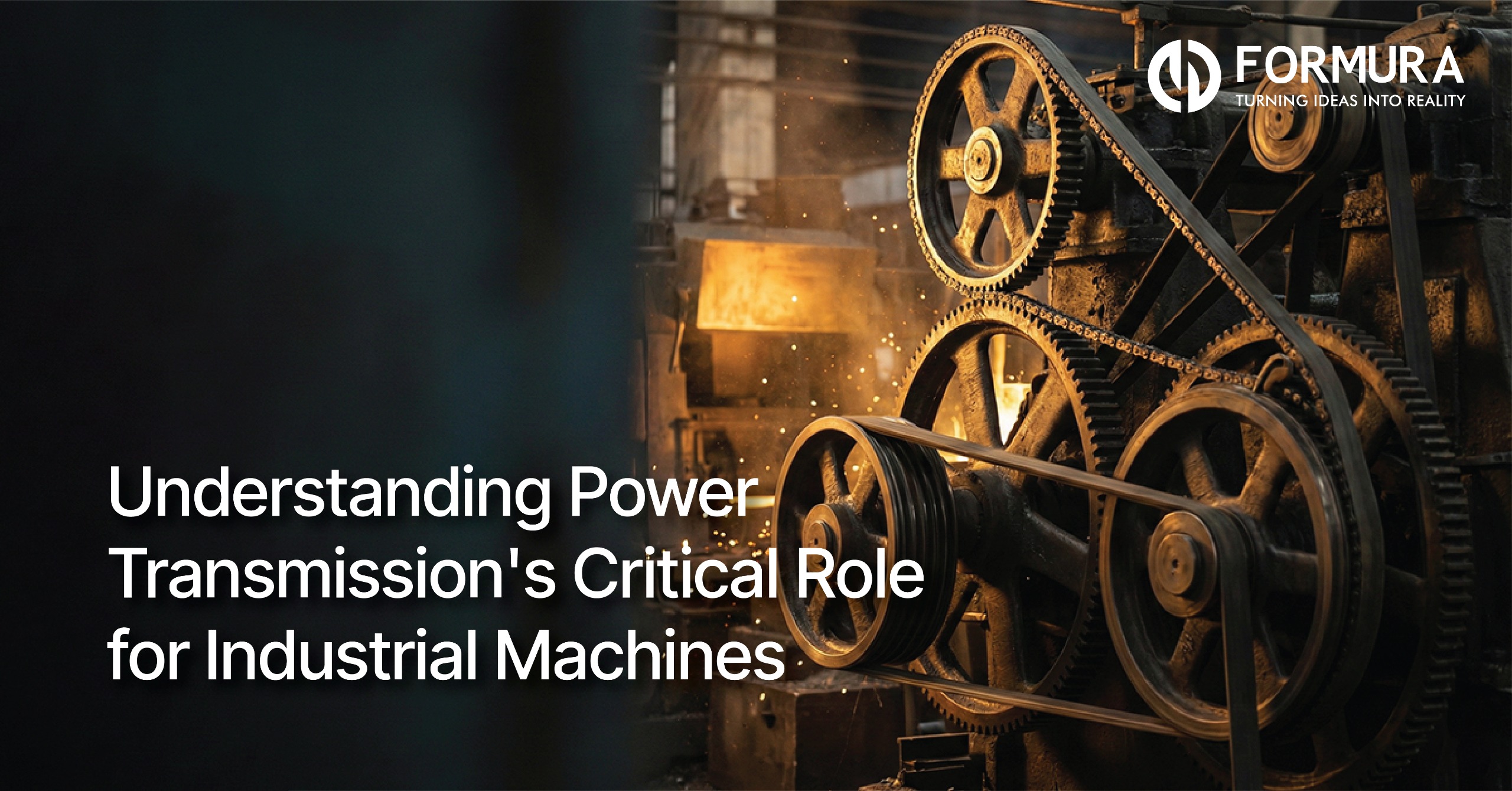
The Invisible Backbone: Understanding Power Transmission's Critical Role for Industrial Machines
The Invisible Backbone
Imagine the human body. Its muscles provide the raw force, but it's the circulatory system—the network of arteries and veins—that delivers the energy (oxygen and nutrients) precisely where it's needed for every movement. When an artery is blocked, the crisis is immediate and severe.
Similarly, in an industrial setting, the motor or engine is the muscle, but the Power Transmission Systems are the circulatory network. This critical, yet often overlooked, link converts raw energy into productive, controlled work. A failure here doesn't just inconvenience; it can halt an entire factory, resulting in thousands of dollars per hour in lost production.
The central idea is clear: Power transmission is the fundamental, critical link that converts energy from a source (such as motors or engines) into productive work, directly impacting Industrial Efficiency, cost, and uptime across every industry. Without a reliable power transmission system, the most advanced industrial machinery is nothing more than a static shell.
In this deep dive, we will explore what these systems are, detail their key Power Transmission Components, reveal their vital role across various sectors and Manufacturing Processes, and show you how optimizing them—often through partners like Formura—is the key to achieving superior energy efficiency and operational reliability.
Part 1: What Are Power Transmission Systems?
Core Definition
At its core, a Power Transmission System is an engineered network of components designed to transfer mechanical energy from a power source (the "prime mover," like an electric motor or engine) to an application (the "driven equipment," like a conveyor belt, pump, or mixer). Their function is to bridge the gap between where the power is generated and where the work needs to be done.
The Two Main Types
While the term can refer broadly to energy transfer, it typically encompasses two domains:
- Electrical Power Transmission: This involves high-voltage lines distributing electricity over long distances, from a power plant to a substation.
- Mechanical Power Transmission: This is the focus for industrial machinery. It involves physical components—Mechanical Power Transmission—moving in proximity to transfer power directly to the machine itself.
Key Function: More Than Just Moving Power
The true value of mechanical power transmission lies not just in moving power, but in controlling it. These systems are essential for:
- Controlling Speed: Stepping up or reducing the rotational speed to match the process requirement.
- Controlling Torque: Adjusting the turning force to handle heavy loads, such as in equipment lifting solutions.
- Controlling Direction: Changing the axis of rotation (e.g., from a horizontal motor shaft to a vertical mixer shaft).
This precision is what turns raw, unrefined energy into useful, controlled motion essential for modern manufacturing.
Part 2: Core Components & How They Work
The effective transfer of power relies on a specialized "toolkit" of Power Transmission Components.
| Gear Drives | Precise speed and torque control; extremely robust. | Heavy-duty crushers, steel rolling mills. |
| Shaft Couplings | Connects two shafts to transmit power; manages alignment. | Linking a motor to a gearbox in a pump system. |
| Belt Drives | Flexible, quiet, and absorbs shock; used for longer distances. | Conveyor belts, HVAC fans. |
| Chain Drives | High-torque, non-slip positive drive; durable in harsh settings. | Forklifts, material handling in a cement plant. |
| Power Screws | Converts rotational motion into highly precise linear motion. | CNC machine positioning tables, heavy Jacking System Services. |
Details on Critical Components
- Gear Drives: These are the powerhouses for achieving high torque and precise speed changes. Gear drives (including spur, helical, and worm gears) offer a positive, no-slip drive. Their ability to deliver specific speed ratios makes them indispensable in processes requiring high control.
- Shaft Couplings: These are the essential connectors. A motor is rarely bolted directly to the driven machine; it's linked via a coupling. Coupling solutions are divided into:
- Rigid Couplings: Used when shafts are in perfect, unchangeable alignment.
- Flexible Couplings: The more common choice, they absorb the unavoidable minor misalignments, thermal expansion, and vibration, protecting both the motor and the machine. Choosing the right part from a reliable Coupling seller like Formura is crucial for longevity and performance.
- Belt and Chain Drives: Belt drives offer excellent shock absorption and quiet operation, while chain drives provide a positive engagement, making them more robust for high-load, heavy-duty applications like various lifting solutions.
Also Read : Top Industrial Gearbox Maintenance and Inspection Tips for Peak Performance The Ultimate Guide to Couplings for Heavy Machinery
Part 3: The Critical Role Across Industries
The reliability and precision of Power Transmission Systems are not universal—they must be tailored to the specific demands of the sector.
Manufacturing & Automation
In the heart of any modern factory, precise power transmission is the engine of productivity. It drives the high-speed spindles of CNC machines, the articulated joints of robotic arms, and the consistent pace of assembly and conveyor belts. Here, the system's accuracy dictates production line speed, product quality, and ultimately, competitive advantage. Companies like Formura provide high-quality Power Transmission Components that ensure this level of consistency in demanding Manufacturing Processes.
Aerospace & Heavy Machinery
In applications like aircraft systems, massive cranes, or mining equipment, the need is for ultra-reliable, high-torque systems. Heavy machinery requires specialized Jacking System Services and robust lifting solutions. A catastrophic failure in these systems is not just a costly outage; it can pose extreme safety hazards. Consequently, components like bearings, gear drives, and couplings must be over-engineered for resilience and longevity, which is why sourcing high-grade components from trusted providers is essential.
Food, Beverage & Pharmaceutical
These sectors introduce unique constraints: the systems must not only be reliable but also resistant to corrosion from frequent washdowns and designed to prevent contamination. The focus shifts to specialized components made from stainless steel, paired with lubrication systems that meet strict food-grade or pharmaceutical standards.
Part 4: The Direct Link to Efficiency, Cost, and Safety
The most compelling argument for the critical role of power transmission lies in its direct impact on the bottom line. It's the #1 determinant of plant reliability and a major factor in operational cost.
Combating Energy Waste and Maximizing Energy Efficiency
One of the highest hidden costs in industry is wasted energy. Misalignment, friction, and slippage in worn Power Transmission Components are the primary culprits.
- A simple bearing running low on lubrication, a stretched belt slipping on its pulley, or a misaligned coupling dramatically increases the power drawn by the motor to do the same amount of work.
- This energy is lost as heat, directly increasing utility bills and lowering overall energy efficiency. Formura's focus on high-precision Coupling solutions and robust components helps minimize friction and slippage, offering an immediate path to reducing the Total Cost of Ownership (TCO) of industrial machinery.
Maximizing Uptime & Throughput
In high-volume Manufacturing Processes, time is money. A single failed bearing or snapped belt can stop an entire production lin
- This downtime can cost a factory anywhere from a few hundred to tens of thousands of dollars per hour.
- A robust, well-maintained Power Transmission System sourced from reputable vendors like Formura is the best insurance against unplanned outages, guaranteeing higher throughput and consistent delivery schedules.
Enabling Predictive Maintenance
The shift in industry is away from reactive fixes ("replace it when it breaks") toward proactive, predictive maintenance. Modern power transmission facilitates this.
- IoT sensors are now deployed on key industrial machinery and Power Transmission Components to monitor vibration, temperature, and current draw.
- An increase in vibration in a gear drive, or a rise in temperature at a coupling, signals impending failure, allowing maintenance teams to schedule a repair during planned downtime before the component fails catastrophically. This strategy is the hallmark of modern reliability-centered maintenance.
Ensuring Safety
A well-maintained power transmission system is also a safety asset. Components operating outside their specified limits—like an overloaded chain or a seized bearing—can fail violently, posing a serious threat to machine operators. Regular inspection and maintenance, particularly for heavy-duty lifting solutions and Jacking System Services (where Formura's robust solutions are frequently employed), are non-negotiable for workforce safety.
Conclusion: More Than Just Machinery
Power transmission is not a peripheral concern; it is the strategic asset central to both productivity and profitability. The seemingly simple components—the gear drives, the couplings, the belts—are the unseen foundation upon which Industrial Efficiency is built.
By prioritizing the correct selection, installation, and modern predictive maintenance of their Power Transmission Systems, and by relying on high-quality component suppliers and solution providers like Formura, businesses can move beyond managing risk to strategically unlock higher energy efficiency, maximize machine uptime, and secure a sustainable competitive edge in their respective Manufacturing Processes. The strength of the backbone determines the capability of the body.