What is a Jack-up Rig in the Oil Industry?
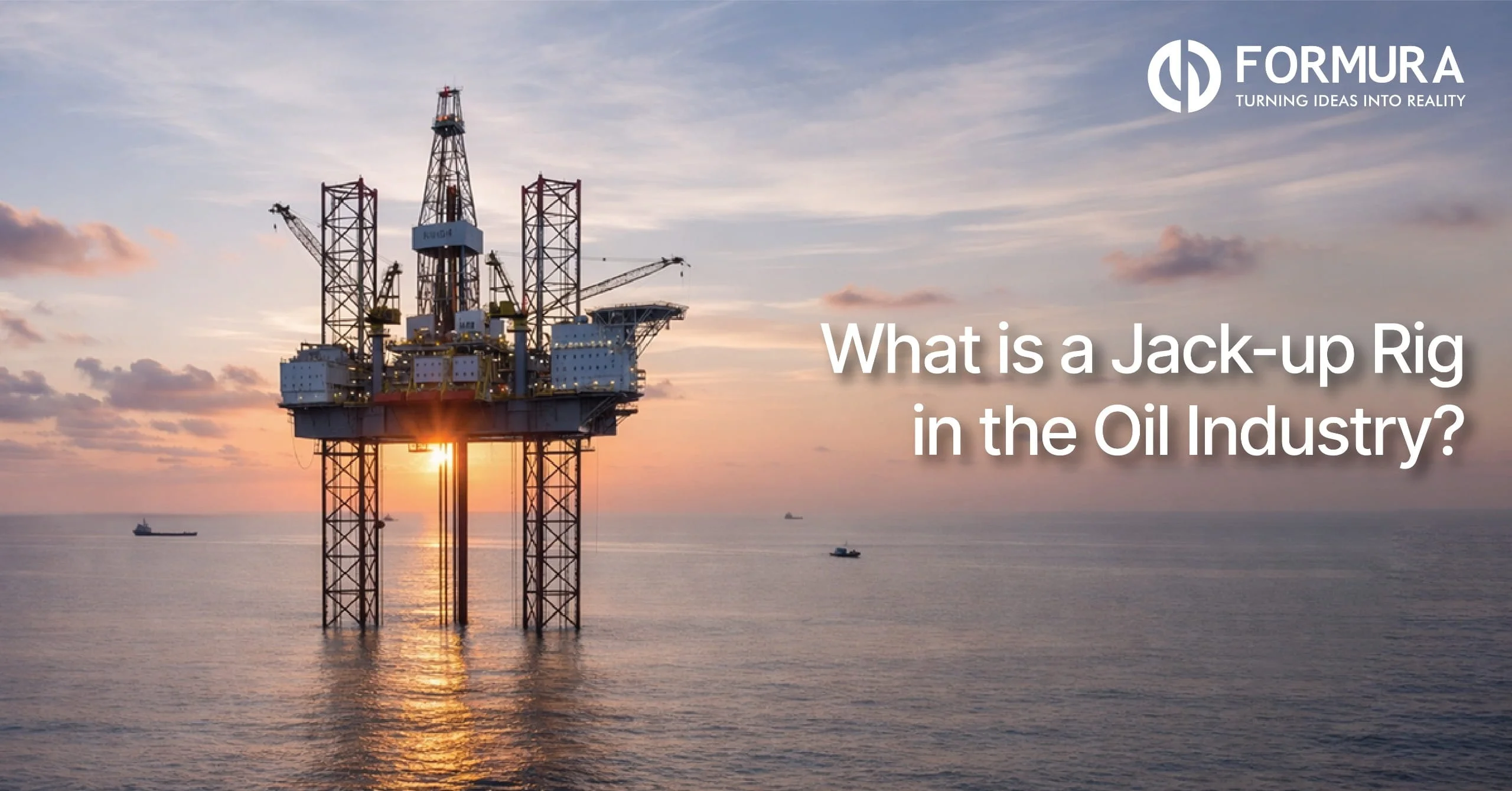
The Stable Workhorse of Shallow Waters: What is a Jack-up Rig?
Imagine standing on a massive steel island, hundreds of feet above the crashing waves of the ocean. Below you, towering steel legs stretch through the depths, anchored firmly into the seabed. This is the daily reality of the jack-up rig, one of the most ingenious pieces of industrial machinery ever designed for the energy sector.
As the global energy demand continues to rise, the technology used to extract resources from beneath the ocean floor must be both robust and precise. Among the various types of offshore drilling rigs, the jack-up rig stands out as the primary solution for exploration and development in shallow shelf waters. It is the bridge between land-based drilling and the complex world of deep-sea extraction.
In this guide, we will explore what a jack-up rig is, how these structures function, and how industry experts like Formura provide the critical jacking system services that keep these giants operational.
What Exactly is a Jack-up Rig?
At its core, a jack-up rig is a type of Mobile Offshore Drilling Unit (MODU). Unlike permanent production platforms, a MODU is designed to be moved from one location to another as drilling projects are completed.
The defining characteristic of a jack-up rig—and the reason for its name—is its ability to "jack" itself up out of the water. It consists of a buoyant hull fitted with movable legs. When the rig reaches its destination, these legs are lowered until they make contact with the seafloor. Once secure, specialized jacking equipment lifts the entire hull (the platform) upward, clear of the water's surface.
The Key Distinction: Jack-up vs. Semi-Submersible
In the world of offshore oil drilling, choosing the right tool depends on the environment:
- Jack-up Rigs: These are "bottom-founded." Because the seabed physically supports them, they provide a stationary, motion-free platform. This makes them the gold standard for shallow water drilling.
- Semi-Submersibles: These are "floating" rigs used in deeper waters. While versatile, they are subject to the movement of waves, whereas a jack-up remains rock-steady.
Anatomy & How It Works (Jack-up rig): A Step-by-Step Process
A jack-up rig is a masterpiece of engineering that relies on heavy-duty lifting solutions. To understand how a jack-up rig operates, we must examine its three primary components.
1. The Hull
The hull serves as the vessel's body. During transit, it provides buoyancy. Once elevated, it becomes the working deck, housing the drilling derrick, crew quarters, and the complex jacking system.
2. The Legs
Jack-up rig legs are typically made of open-truss steel. At the base are spud cans—large, inverted cones that distribute the weight and prevent the legs from sinking too deeply into the soft seabed.
3. The Jacking System
The heart of the rig’s mobility is the jacking system. These are specialized equipment lifting solutions that move the hull up and down. Companies like Formura specialize in the inspection, maintenance, and manufacturing of these high-performance systems. Using a rack-and-pinion mechanism, these systems allow for millimetric precision during the elevation process.
The Operational Sequence
- Transport: The rig is towed to the location with legs raised.
- Positioning & Preloading: Legs are lowered. Preloading involves filling the hull with water to simulate maximum weight, ensuring the legs won't penetrate further into the seabed during a storm.
- Jacking Up: The hull is raised to the "air gap"—a safe distance above the waves.
- Drilling: Operations commence, often using a cantilever jack-up rig derrick that extends over the edge of the platform.
Types of Jack-up Rigs
Not all seafloors are the same, leading to different rig designs:
- Independent Leg: Each leg moves separately, ideal for uneven or firmer seabeds.
- Mat-Supported: Legs are connected by a large steel "mat" to distribute weight on very soft, muddy bottoms.
- Cantilevered: (Most Common) The derrick is on an extending arm, allowing it to drill adjacent to existing platforms.
- Slot-Type: The derrick sits over a "keyway" opening in the deck.
Why Choose a Jack-up? Key Advantages
- Superior Stability: The elevated hull is isolated from waves and currents, allowing for precise drilling.
- Mobility & Reusability: Rigs can be floated between locations and redeployed quickly.
- Cost-Effectiveness: Generally more economical than deepwater floaters for shallow-water projects.
- Expert Support: With dedicated Jacking System Services from providers like Formura, operators can ensure their jacking equipment meets strict safety and performance standards (like ABS or API certifications).
Limitations and Considerations (Jack-up rig)
- How deep can a jack-up rig drill? While historically limited to 350 feet, modern units can now reach 550 feet.
- Seabed Dependency: Requires a seabed that can support leg loads; not suitable for extremely rocky terrain.
- Weather Windows: The transition from floating to "jacked up" is sensitive to sea conditions.
The Evolving Role and Future
The history of jack-up rigs dates back to 1954, but the technology is more relevant than ever. Modern "high-specification" units are now used not just for oil, but for installing offshore wind turbines. As these machines become more complex, the role of engineering firms like Formura—who provide complete lifting solutions and power transmission products—becomes vital to minimizing downtime and ensuring jack-up rig safety features are always top-tier.
Conclusion
The jack-up rig is the versatile, stable, and efficient solution for shallow-water hydrocarbon extraction. By combining the mobility of a ship with the stability of a fixed platform, it remains the backbone of the offshore industry.